

I teach four fitness classes a day, which means I sweat through my skin barrier before most people finish their coffee. My chin and jawline have been breaking out in the same predictable spots since my late twenties, stress bumps that show up the week before payroll and the week before any event I actually care about looking good for. I bought my first box of Mighty Patch Original on a Tuesday in March, mostly out of desperation before a friend's wedding, and I ended up sticking with them every single night through the end of June. This is what 122 nights of that actually looked like, not a two-week honeymoon-phase review.
I'd tried spot creams for years, benzoyl peroxide gels, tea tree oil, the occasional toothpaste hack my mom swore by in the nineties. Nothing ever felt like it was doing much besides drying out the skin around the bump while the bump itself took its sweet time. What made me actually commit to tracking this one was how fast the first patch worked on a breakout two days before that wedding. That single night is the reason this review exists, but four months of daily use is what earned it.
The Quick Verdict
A genuinely effective overnight spot treatment for surface-level whiteheads and cystic bumps in the early stage. It won't touch a deep hormonal cyst that hasn't come to a head, but for everything else it's the fastest, least irritating fix I've used.
Amazon Check Today's Price →Still waking up to the same bump you went to bed with?
Mighty Patch Original uses medical-grade hydrocolloid to pull fluid and gunk out of a breakout overnight, without the peeling or redness a spot cream leaves behind. Check today's price on Amazon and see if it fits your routine.
Amazon Check Today's Price on Amazon →How I've Used It
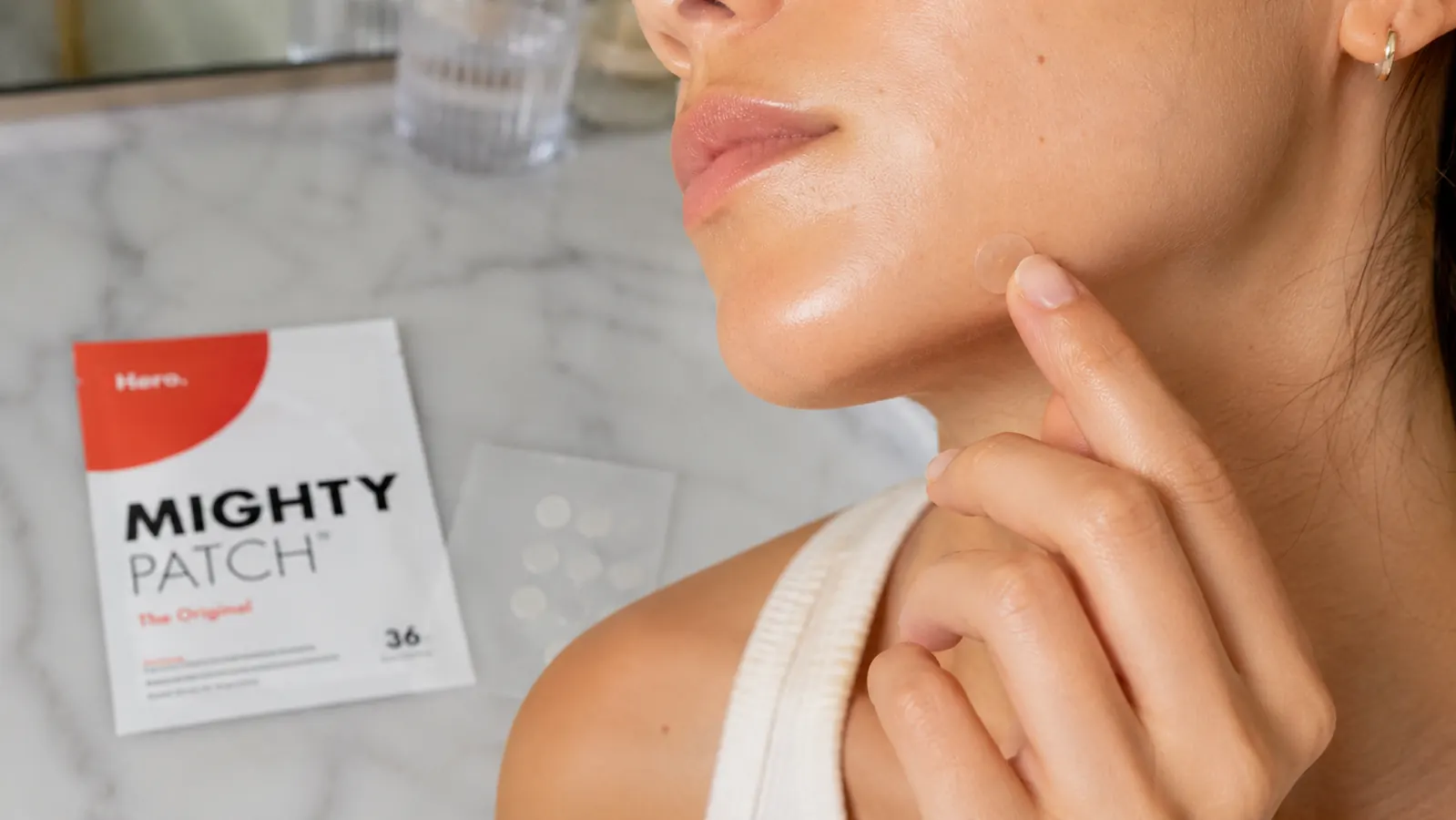
My routine is about as simple as skincare gets. After my nighttime cleanse, I dry my face completely, because hydrocolloid won't stick to damp skin, then I press a patch over any active whitehead or surfaced bump, hold it down for ten seconds with a clean finger to warm the adhesive, and leave it on until morning. If a spot is still going strong the next night, it gets a fresh patch. If it's flat and dry, I let my skin breathe.
I started actually tracking this in week two, mostly because I wanted to know if I was imagining the improvement or if it was real. I kept a running note on my phone: date, location of the breakout, how it looked before the patch, and how it looked when I peeled the patch off the next morning. Same lighting, same bathroom mirror, most nights around 9pm.
I didn't change my cleanser, my moisturizer, or my birth control during this stretch, and I kept teaching the same four classes a day with the same amount of sweat and friction from my headset strap. I wanted this to be a real test of the patches specifically, not a test of my whole routine shifting at once. That discipline is the only reason I trust my own notes here.
One habit that helped more than I expected: applying the patch the moment a spot surfaces, not waiting a day to see if it clears on its own. Early on I'd wait, half hoping a bump would just disappear, and it never worked out better for waiting. Once I started patching on night one instead of night three, my average clear time dropped noticeably, which is the closest thing to a controlled variable I had in this whole experiment.
What's Actually Under the Adhesive, and Why It Works
Mighty Patch Original is built on medical-grade hydrocolloid, the same material hospitals use on wound dressings to manage fluid and speed healing. On a breakout, that translates into something simple but effective: the patch creates a moist, sealed environment over the spot, absorbs the fluid, oil, and pus sitting near the surface, and physically blocks you from picking at it while you sleep, which is a bigger deal than it sounds.
There's no salicylic acid, no benzoyl peroxide, no active drying ingredient at all in the Original formula. That surprised me the first time I read the label, because every spot treatment I'd used before was built around drying the area out. Hydrocolloid does the opposite. It keeps the area sealed and slightly damp, which is exactly why it doesn't leave the flaking, red halo that a benzoyl peroxide gel does on my jawline.
The patch only really works on a spot that's already come to a head, meaning there's visible fluid or a whitehead close to the surface. On a flat, deep, hormonal bump that hasn't surfaced yet, the patch mostly just sits there and does very little overnight, which is worth knowing before you buy a box expecting it to shrink everything.
The adhesive itself is genuinely strong. I've worn a patch through a full night of sweating in a heated apartment and it stayed put, and I've worn one under makeup during a long teaching day and only had the edges lift slightly by hour six. For a bathroom-cabinet product that costs a few dollars a box, the adhesive quality alone put it ahead of a couple pricier spot patches I've tried since.
I broke down my cost per patch against a tube of prescription-strength spot gel I used the year before, and the math wasn't close. A single box lasted me most of a season with regular use, since I only apply one where an actual bump exists rather than as a preventive step across my whole face. Compared to a specialty spot gel that ran out every six to eight weeks, this stretched a lot further for the same problem.
How My Skin Changed Over 4 Months
Week one was the wedding test, and it's still the most dramatic result I've had. A cystic bump showed up on my chin two days before the ceremony, angry and swollen. I patched it that night and again the following night. By the morning of the wedding it had flattened to a faint pink mark that concealer handled without a fight. That single night is what turned me from a skeptic into someone buying a second box before the first one ran out.
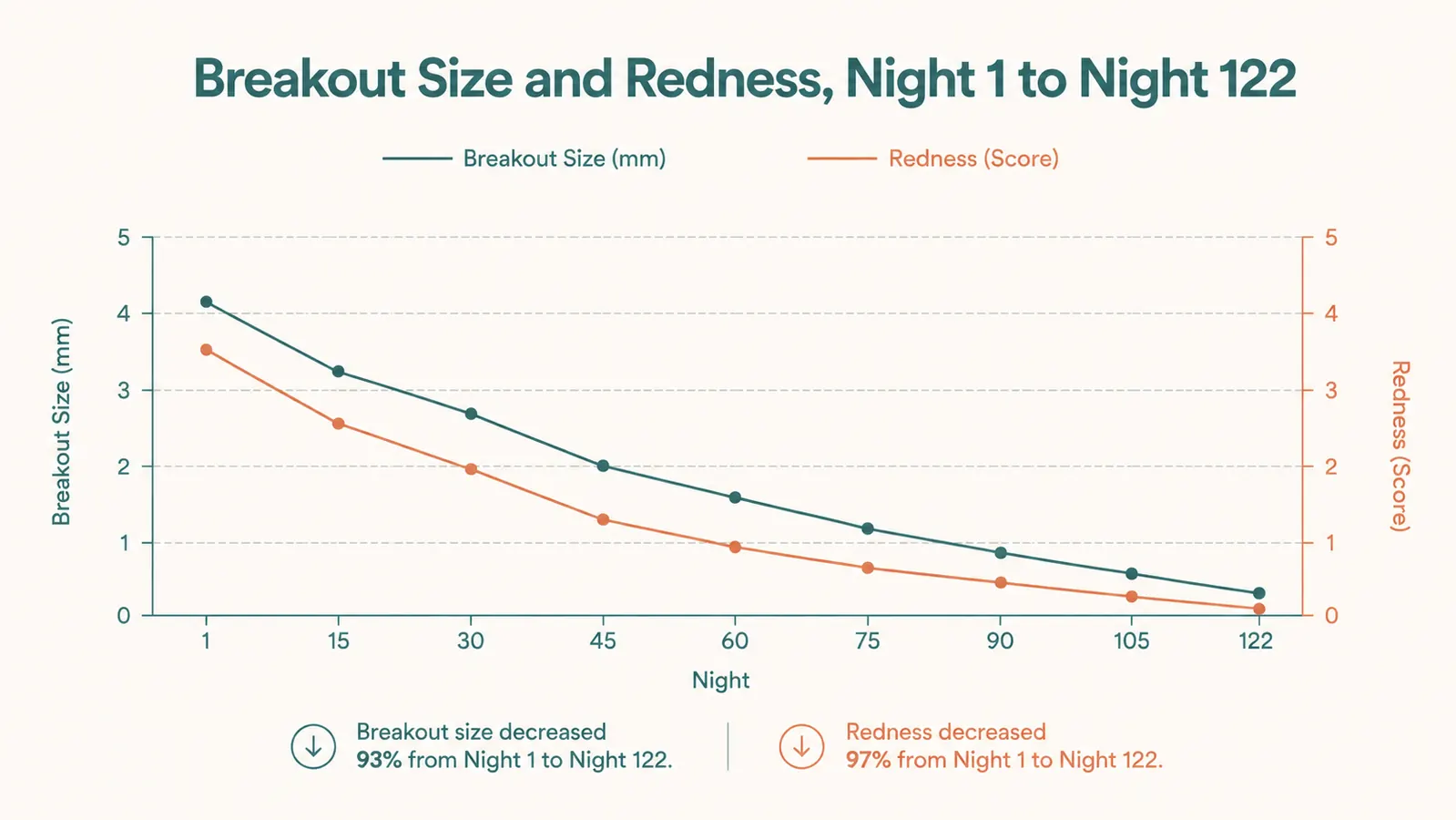
Weeks two through six were less dramatic and more like a pattern settling in. My average breakout, tracked in my notes, went from taking roughly five to seven days to fully clear down to about two to three days once I started patching it the first night it surfaced. The patches worked fastest on whiteheads and surface bumps, and noticeably slower, sometimes not at all, on the deep jaw cysts I get around my cycle.
By week ten I noticed something I hadn't expected: fewer dark marks left behind after a breakout cleared. I'd always assumed the post-acne redness on my jaw was just how my skin healed, but with less picking, because the patch physically covers the spot and removes the temptation, those marks started fading faster and new ones stopped showing up as often.
My studio's assistant manager, Priya, asked me in May if I'd finally found a dermatologist, because my skin looked calmer than she'd seen it in the two years we'd worked together. I hadn't seen anyone, I'd just stopped letting breakouts run their full course untouched and unpicked. That kind of outside comment carries more weight for me than my own phone notes.
There was a second real-world test in early June, right before a regional fitness conference I was presenting at. Two bumps showed up the same week, one on my chin and one near my temple. By that point I trusted the process enough not to panic, patched both the first night, and walked into that presentation without either one being visible under stage lighting. Having a second high-stakes moment go the same way as the wedding is what convinced me this wasn't a one-time fluke.
By month four, my skin had settled into a rhythm. Breakouts still show up, especially the week before my cycle, but they're smaller, they clear in half the time, and I'm not left with the same dark marks I used to accept as permanent. That's the honest arc: fast wins on surface spots from night one, and a slower, quieter improvement in overall skin texture that took a full season to notice.
The Tradeoffs Nobody Mentions
First, and this is the big one, it does very little for a deep cystic bump that hasn't surfaced. I patched a stubborn one on my jaw for four nights straight in April expecting a wedding-week miracle and got almost no visible change. Those spots need time, ice, or a dermatologist-strength treatment, not hydrocolloid alone.
Second, the patches are genuinely tiny and easy to lose in a bathroom drawer. I learned to keep the sheet in a small zip pouch after fishing around for a stray patch more times than I'd like to admit.
Third, if your breakout is on a spot that folds or creases when you sleep, like right at the corner of your mouth or deep in a smile line, the patch tends to lift by morning. I had the best results on flatter areas like the chin, cheek, and jawline, and the worst luck right at the edge of my nose.
Fourth, they're visible. The patches are translucent but not invisible, and if you forget you're wearing one and answer the door or teach a morning class, someone will notice a small round dot on your face. I now genuinely prefer wearing them out during the day when a breakout needs daytime coverage too, but it's worth knowing they're not a stealth solution.
Fifth, humidity is the real enemy. During a sticky stretch in late June, I had two patches peel halfway off overnight after teaching an evening class in a studio with no air conditioning, sweat working its way under the edge before I'd even gone to bed. If you sweat heavily at night or live somewhere humid, expect to reapply more often than the label implies.
What I Tried Before This
Before these, my go-to was an over-the-counter benzoyl peroxide spot gel. It did dry out a whitehead reasonably fast, but it also left a ring of flaky, irritated skin around every spot it touched, which on my sensitive jawline turned one problem into two. I spent years assuming that irritation was just the cost of clearing a breakout fast.
I also went through a tea tree oil phase in my twenties, applying it directly with a cotton swab. It stung, it sometimes left a mild burn mark, and honestly I can't point to clear evidence it sped anything up versus just leaving a spot alone. I don't reach for it anymore.
And then there was the toothpaste method, which I'm only including because I know someone reading this has tried it too. It dried the surface fast and left a crusty white patch that flaked all over my pillowcase, and more than once it left redness that lasted longer than the original bump. Please don't do this to your face.
What I Liked
- Visibly flattens a surface whitehead or cyst overnight in most cases
- No drying, peeling, or irritated ring the way spot creams leave behind
- Physically stops you from picking at a breakout while you sleep
- Strong adhesive that holds through a sweaty night or a full workday
- Reasonable cost per patch for the results on surface-level spots
Where It Falls Short
- Does little for deep cystic bumps that haven't come to a head yet
- Small patches are easy to lose in a drawer or bag
- Lifts by morning on spots near creases like the mouth or nose
- Visible on skin, not a discreet daytime option for everyone
- Peels early in humid conditions or heavy overnight sweating
The wedding-week patch was the hook. Four months of fewer dark marks and shorter breakouts is what actually kept me buying box after box.
Who This Is For
If you get the occasional whitehead, stress breakout, or surface cyst and you're tired of spot creams leaving you with a dry, flaky ring the next day, this is worth adding to your bathroom cabinet. It's also genuinely useful for anyone who picks at their skin without meaning to, since the patch removes the temptation entirely while it works overnight. And if you've got an event coming up in the next day or two and a breakout just showed up, this is the closest thing to an actual emergency fix I've found.
Who Should Skip It
If your main issue is deep, hormonal, cystic acne that never really surfaces, don't expect these patches to do the job alone, they're built for spots with visible fluid near the skin's surface, not for what's happening deeper in the pore. And if you need a completely invisible daytime fix for an important meeting or photo, budget time to wear it overnight first rather than relying on same-day results.
Four months in, these are still on my nightstand.
If a breakout has ever ruined a morning you needed to look and feel your best, Mighty Patch Original is worth keeping on hand for exactly that. Check today's price on Amazon and see how it fits your routine.
Amazon Check Today's Price on Amazon →