

I've had oily, combination skin since I was fifteen, and twelve-hour ER shifts under fluorescent lights do it no favors. By hour eight my T-zone is a slick, my chin has three new bumps, and the surgical mask I wear for half my shift has turned my jawline into a breeding ground. I started using CeraVe Foaming Facial Cleanser on March 3rd of this year, morning and night, and I kept using it every single day through July. This is what 122 days of that actually looked like, not a two-week first impression.
I'm not new to foaming cleansers. I've cycled through drugstore brands, a pricier dermatologist-recommended wash, and a bar soap phase in my mid-twenties I'd rather not talk about. What made me commit to this one long enough to write a real review is that it's the first cleanser in years that didn't leave my skin either greasy by noon or tight and flaking by evening. That balance is the whole story here, so let's get into it.
The Quick Verdict
A genuinely balanced foaming cleanser that cuts oil without stripping your skin barrier. Not a quick fix for cystic acne, but it's the most consistent daily wash I've used in years.
Amazon Check Today's Price →Still washing with something that leaves you tight or greasy by noon?
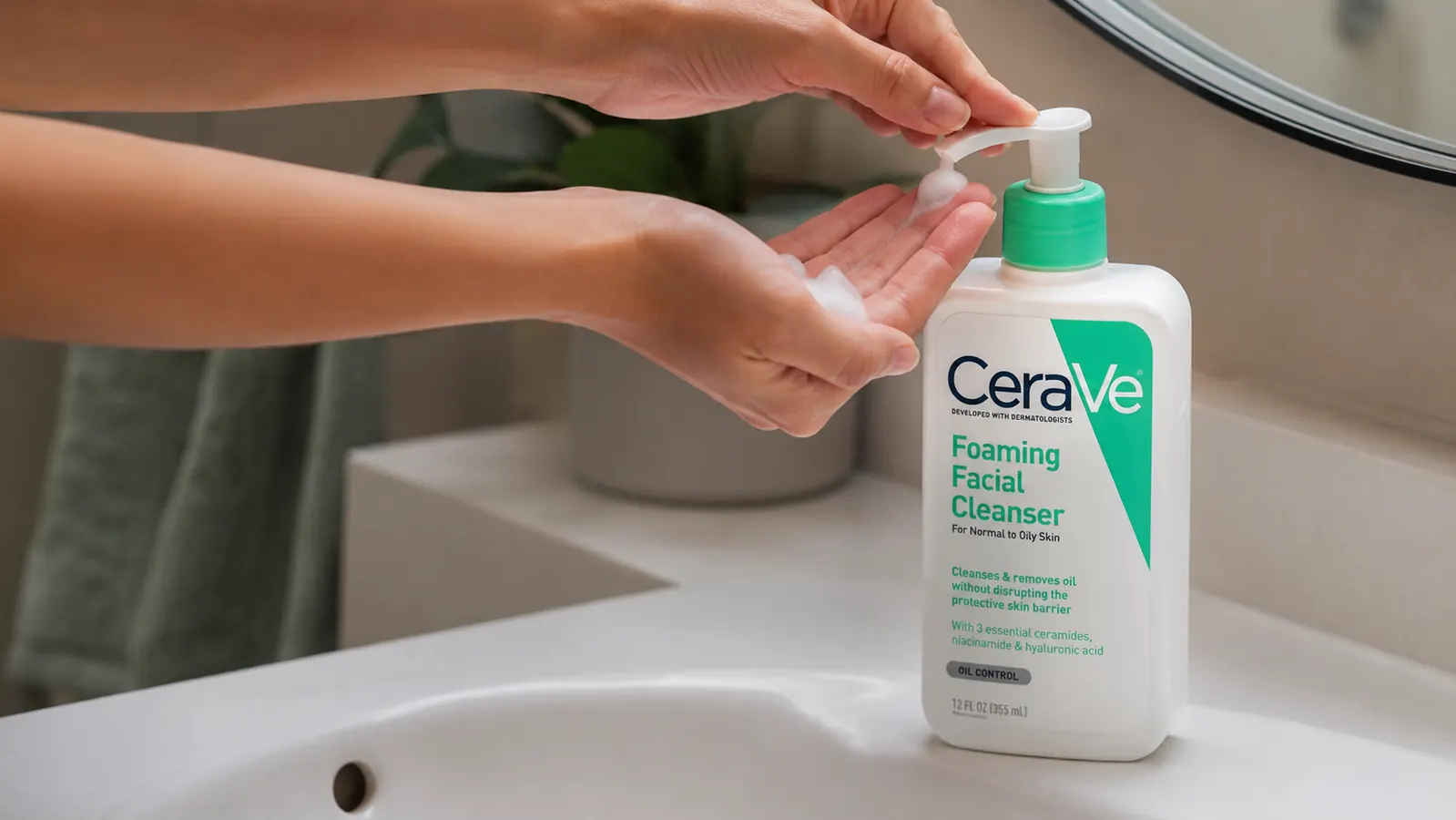
CeraVe Foaming Facial Cleanser is formulated with three ceramides, niacinamide, and hyaluronic acid, built specifically for oily and combination skin that still needs its barrier protected. Check today's price on Amazon and see if it fits your routine.
Amazon Check Today's Price on Amazon →How I've Used It
My routine is unglamorous and that's the point. Morning: splash of lukewarm water, a nickel-sized pump worked into a light lather with damp hands, thirty seconds on my forehead, nose, and chin, fifteen more around my jaw and neck, then rinsed and patted dry. I follow it with a plain moisturizer and sunscreen before my shift. At night, same process, except I do a first cleanse with micellar water to get mask residue and the day's grime off before the actual wash.
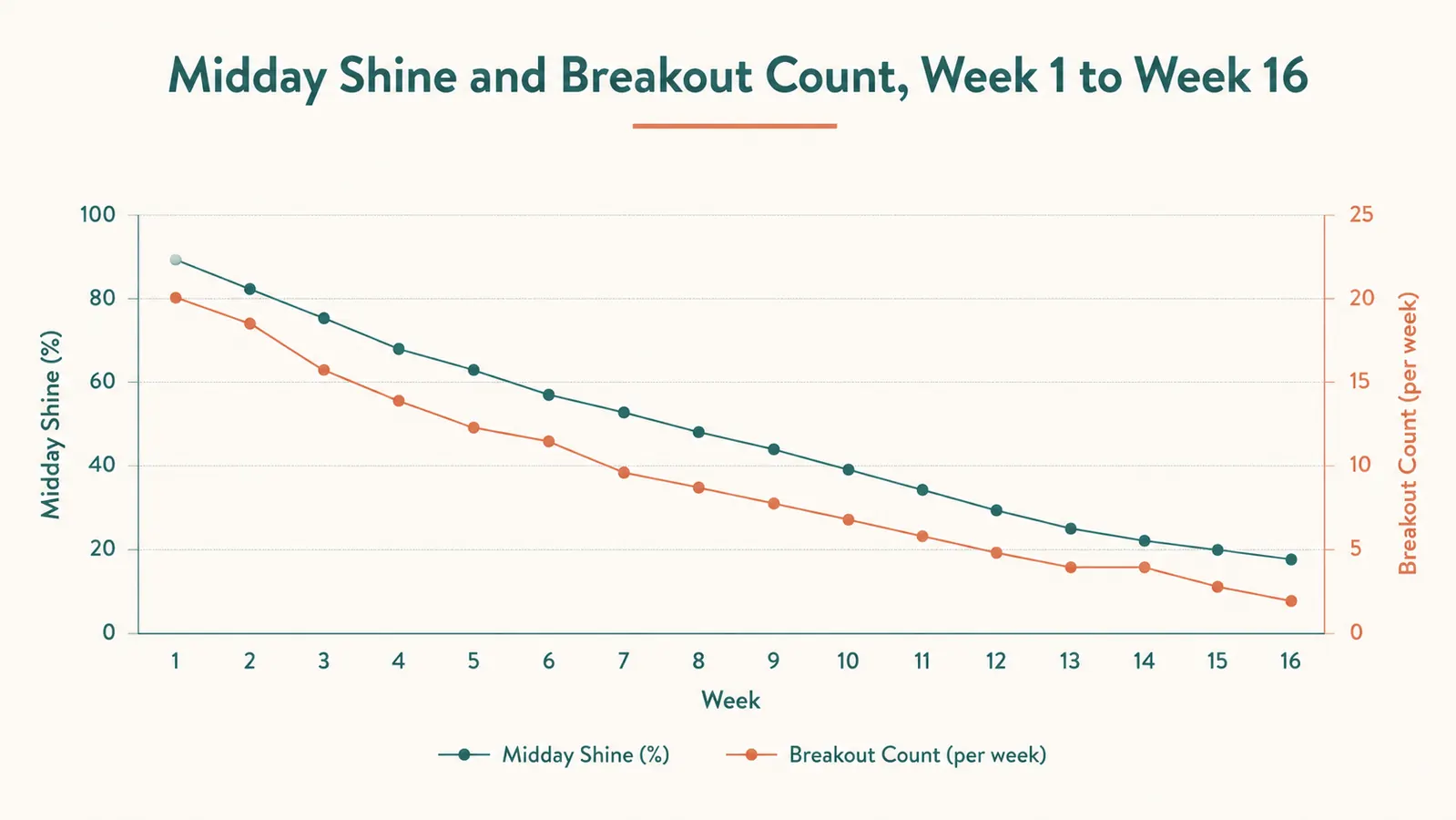
I tracked this loosely in my phone notes starting week two, mostly because I wanted to know if the early improvement was real or just placebo from paying attention to my skin more. I noted midday shine on a rough one-to-five scale and counted active breakouts once a week, same day, same lighting, standing in front of the same bathroom mirror.
I did not change my diet, my moisturizer, or my birth control during this window, and I kept my sunscreen the same brand the entire time. I wanted this to be a real test of the cleanser and not a test of my whole routine changing at once. That discipline is honestly the only reason I trust my own results here.
One thing I didn't plan for: our unit's HVAC runs bone-dry recycled air most of the year, which used to leave my cheeks flaky by the end of a shift no matter what I put on them. I noticed within the first month that this cleanser didn't seem to compound that dryness the way my old salicylic wash did, which made the whole routine feel less like damage control and more like actual maintenance.
What's Actually In It, and Why It Matters for Oily Skin
The formula leans on three ceramides (1, 3, and 6-II), niacinamide, and hyaluronic acid, plus ammonium lactate for gentle exfoliation. That combination is why this isn't just a foaming wash that strips oil and calls it a day. Ceramides are the fats that hold your skin barrier together, and a lot of oily-skin cleansers quietly wreck that barrier because they're formulated around one goal: cut through oil at any cost.
Niacinamide is the ingredient that actually sold me on trying this in the first place. It's shown up in enough dermatology literature around oil regulation and redness that I figured it was worth testing in a cleanser instead of just a serum. In a wash-off product it's on the skin for maybe thirty seconds, so I went in with low expectations for it doing much heavy lifting, and that turned out to be roughly accurate. It's a nice-to-have here, not the star.
Hyaluronic acid in a cleanser always struck me as more of a label bullet point than a real functional ingredient, since it rinses down the drain with everything else. What I will say is that even accounting for skepticism, my skin never had that just-washed tightness that usually shows up ten minutes after cleansing, and I can't fully explain that without giving the formula some credit.
The foam itself is genuinely light, almost like a shaving cream texture rather than the tight, squeaky foam I remember from acne washes in my twenties. That squeaky-clean feeling used to be my signal that a product was working. It took me a couple weeks to unlearn that and trust that my face not feeling stripped was actually the better outcome.
How My Skin Changed Over 4 Months
Weeks one and two, basically nothing dramatic. My skin felt cleaner and less tight than my old wash, but shine still crept back by early afternoon and I had my usual two or three chin bumps. I almost wrote this off as another decent-but-not-different cleanser.
By week five something shifted. My midday shine score, which had been sitting at a four out of five most weeks, dropped to a consistent two or three. My skin still got some oil back by the end of a shift, but it wasn't the shiny, almost slick look I'd had for years. I also noticed my skin wasn't reacting as much to the hospital's harsh hand sanitizer fumes that always seem to irritate my cheeks a little.
Weeks eight through twelve were the most consistent stretch. My weekly breakout count, which had averaged around three to four active spots, dropped to one or two most weeks, and the ones I did get were smaller and cleared faster. I want to be careful here: this is not an acne treatment and it didn't clear anything cystic or hormonal. What it did was stop making things worse the way some of my old washes did, and that gave my skin room to actually calm down on its own.
My sister-in-law asked me at a cookout in June if I'd started a whole new skincare routine, and the honest answer was no, I'd just stopped fighting my skin twice a day. That's a small moment, but it's the kind of outside confirmation that matters more to me than my own notes-app tracking.
By month four, my skin had settled into a new normal. Still combination, still oily in the T-zone by evening, but noticeably more even, fewer bumps, and none of the tight, flaky patches I used to get on my cheeks from harsher cleansers. That's the honest arc: gradual, not dramatic, and it took a solid month before I trusted the change was real.
Who This Cleanser Is Actually Built For
This is a cleanser for people whose skin is oily or combination but also sensitive to being over-cleaned. If you've ever had a wash that left your face feeling squeaky and then oily again within two hours, that overcorrection cycle is exactly what ceramide-based foaming cleansers are built to break. It's also a solid fit if you wear a mask for long stretches, work under harsh lighting, or sweat through a physical job, because it holds up to a second cleanse without feeling harsh.
It's a fair fit for teenagers dealing with early oily skin too, though I'd pair it with a dermatologist's guidance if there's active moderate to severe acne involved. This washed my face, it didn't treat a skin condition, and I think reviews that promise otherwise are setting people up to be disappointed.
I'd also point it toward anyone whose skin gets confused by seasons, oily and shiny in summer humidity, tight and flaky the second the heater kicks on in winter. That's been my exact pattern for a decade, and this is the first cleanser that didn't require me to switch products every few months to chase the weather.
The Tradeoffs Nobody Mentions
First, it is genuinely mild, and if you're used to a squeaky, tight-feeling clean, the first week or two might feel like it's not doing enough. I almost switched back after day four for exactly this reason. Give it past the two-week mark before judging it.
Second, the pump dispenser is stiff when the bottle is new and I found myself pressing twice to get a full dose the first couple weeks. Minor, but worth knowing so you don't think you're wasting product.
Third, and this is the one I think matters most: it did nothing for the two or three hormonal cystic breakouts I still get around my jaw most months. This is a maintenance and prevention cleanser, not a spot treatment. If cystic acne is your main issue, this belongs alongside a treatment product, not instead of one.
Fourth, if you're used to a heavily scented cleanser, this one will feel almost clinical by comparison. There's a faint, neutral smell and nothing more. I count that as a plus given how much mask-wearing irritates my skin, but I know plenty of people who miss that spa-like scent in their routine.

What I Tried Before This
Before this I used a salicylic acid foaming wash from a different drugstore brand for almost two years. It kept oil down better in the short term, but my cheeks were constantly dry and flaky, and I ended up layering a heavy moisturizer just to undo what the cleanser had done. That push-pull between a harsh cleanser and a rich moisturizer is common, and it's the exact pattern CeraVe's ceramide approach is designed to sidestep.
I also spent about six months on a pricier dermatologist-line cleanser that worked fine but wasn't meaningfully better than this one for a noticeably higher cost per ounce. Unless your dermatologist has a specific reason to put you on a prescription-adjacent wash, I don't think the price gap is buying you much.
And then there was the bar soap phase, which I mention mostly as a cautionary tale. A basic bar soap will strip your face fast, and mine paid for it with a solid month of both breakouts and dry patches at the same time, which felt like the worst of both worlds. I bring it up because I know a lot of people default to whatever's already in the shower, and your face genuinely deserves its own product.
What I Liked
- Cuts midday oil without the tight, stripped feeling
- Ceramides and niacinamide actually support the skin barrier, not just marketing copy
- Gentle enough for twice-daily use including a second cleanse after a mask
- Fragrance-free, which matters for sensitive, mask-irritated skin
- Reasonable cost per ounce compared to prestige cleansers
Where It Falls Short
- Takes two to three weeks before you notice a real difference
- Won't touch hormonal or cystic acne on its own
- Pump is stiff for the first couple weeks of a new bottle
- Foam is light, so if you equate lather with clean, it takes adjusting to
It stopped making my skin worse, and that alone gave it room to actually get better on its own.
Who This Is For
If your skin is oily or combination and you've been stuck in the cycle of a harsh cleanser followed by a heavy moisturizer just to undo the damage, this is worth the switch. It's also a good call for anyone who wears a mask for long stretches, works under harsh lighting or heat, or just wants a wash that doesn't fight with the rest of a simple routine.
Who Should Skip It
If you're dealing with moderate to severe cystic acne, this won't get you there on its own, pair it with an actual treatment or see a dermatologist. And if you genuinely love a tight, squeaky-clean feeling and equate that with effectiveness, the adjustment period here might frustrate you before it wins you over.
Four months in, this is still the wash in my shower.
If your skin swings between oily by noon and tight by evening, CeraVe Foaming Facial Cleanser is worth a real two-week trial before you judge it. Check today's price on Amazon and see how it fits your routine.
Amazon Check Today's Price on Amazon →