
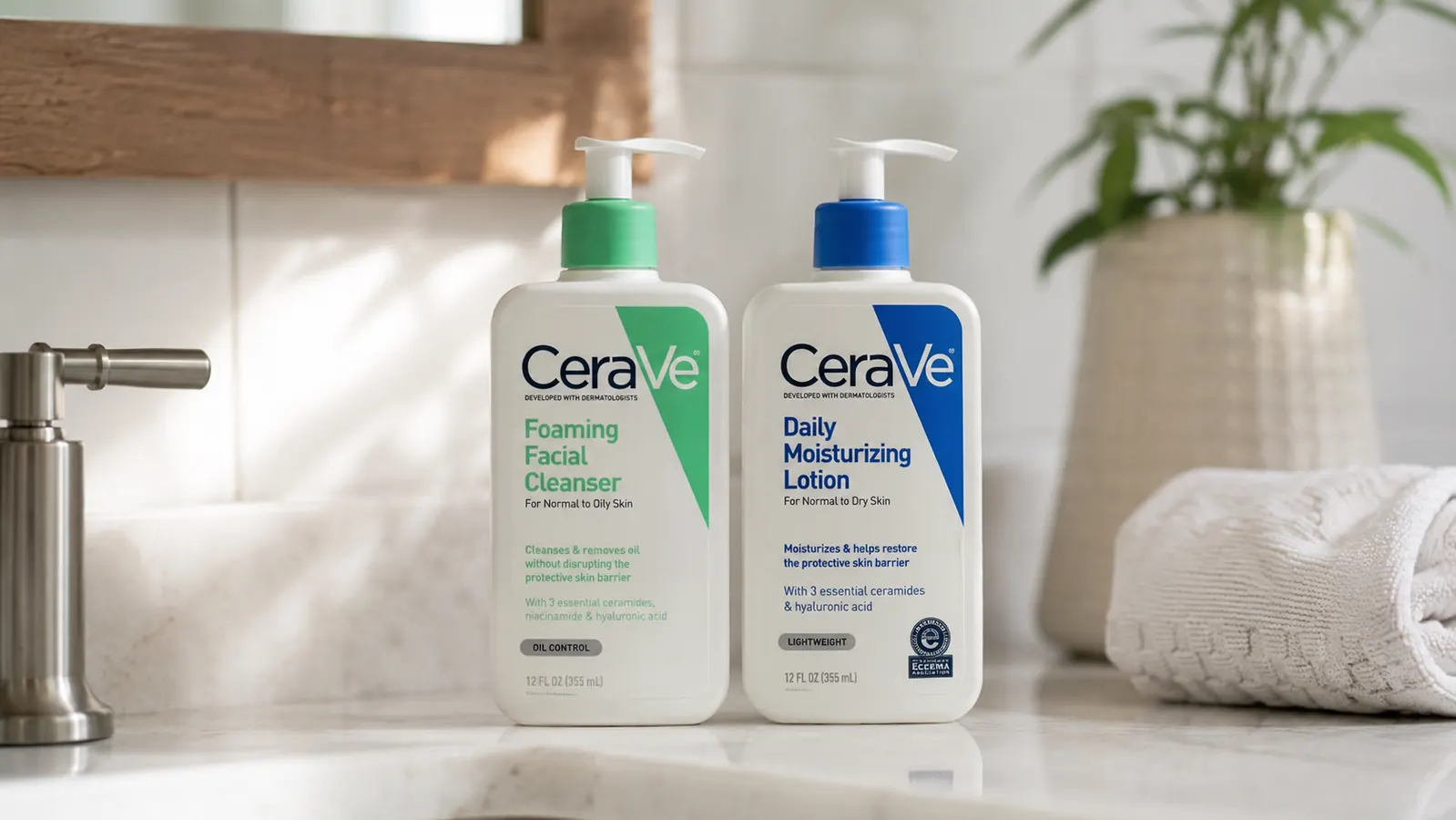
I have two CeraVe bottles sitting on my bathroom shelf right now, and for about a year I could not have told you why either of them was there instead of the other. One has a pump that foams up when you press it. The other comes out like a thin lotion and never bubbles at all. Same brand, same blue-and-white packaging, same ceramide claim on the front. It took actually using both of them side by side, morning and night, for months, before I understood why CeraVe makes two versions of what looks like the same product.
The short answer: CeraVe Foaming Facial Cleanser is built for skin that produces extra oil and needs a real clean, while CeraVe Hydrating Facial Cleanser is built for skin that gets tight, flaky, or irritated if you clean it too well. They share the same ceramide-and-hyaluronic-acid backbone, but the delivery method changes everything about how your skin feels twenty minutes after you rinse. If you have oily or combination skin, or you wear sunscreen and light makeup daily, the foaming version is the one worth ordering. If your skin runs dry, sensitive, or reactive, the hydrating version is the safer pick, and I'll get into exactly why below.
How I Actually Tested Both
I run one bottle of each at a time, on purpose, because my skin swings between oily in summer and dry the second the heat kicks on at home in winter. I kept the foaming cleanser at the bathroom sink for four straight months of regular use, morning and night, and rotated my partner onto the hydrating version at the same time so we weren't comparing notes from memory. Neither of us changed moisturizer, sunscreen, or diet during the test window, which matters, because skin reacts to a lot more than just cleanser.
I also deliberately used the foaming cleanser on a week where my skin was already running dry from cold weather, just to see how far the tightness would go, and I used the hydrating cleanser on a week where I was sweating through long days and wearing sunscreen daily, to see if it could actually keep up with real oil. Neither swap was pretty. That's the clearest way I've found to see what each formula is actually built to handle, instead of just trusting the label.
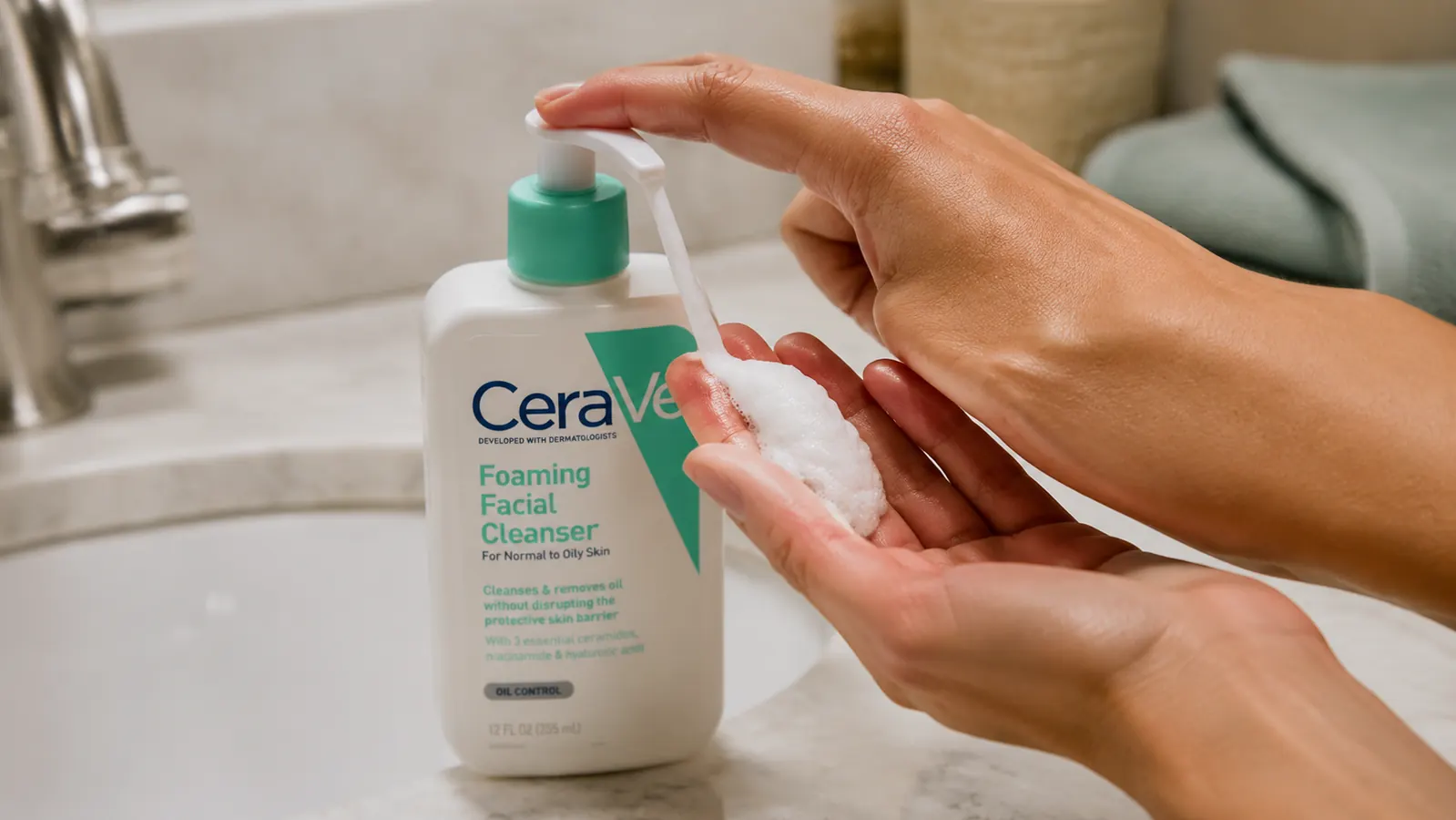
The Core Difference: Foam vs Cream
The ingredient lists on both cleansers overlap more than you'd expect. Both contain the same three ceramides (1, 3, and 6-II) that CeraVe puts in almost everything it sells, plus hyaluronic acid to hold moisture in the skin barrier while you're washing it. Where they split is the surfactant system, the part of the formula that actually lifts oil, sunscreen, and grime off your face. The foaming cleanser uses a stronger surfactant blend that creates that light lather and pulls more oil off the skin. It also adds niacinamide, which the hydrating version does not have, aimed at calming redness and evening out oil production over time.
The hydrating cleanser skips the foaming agents almost entirely. It's closer to a cleansing lotion than a soap, and it's formulated to remove dirt and light residue without touching the skin's natural oil barrier much at all. That's a feature if your skin is dry or eczema-prone, and a drawback if you're trying to get a full day of sunscreen and city grime off your face before bed. Neither formula is objectively better. They're built for opposite problems.
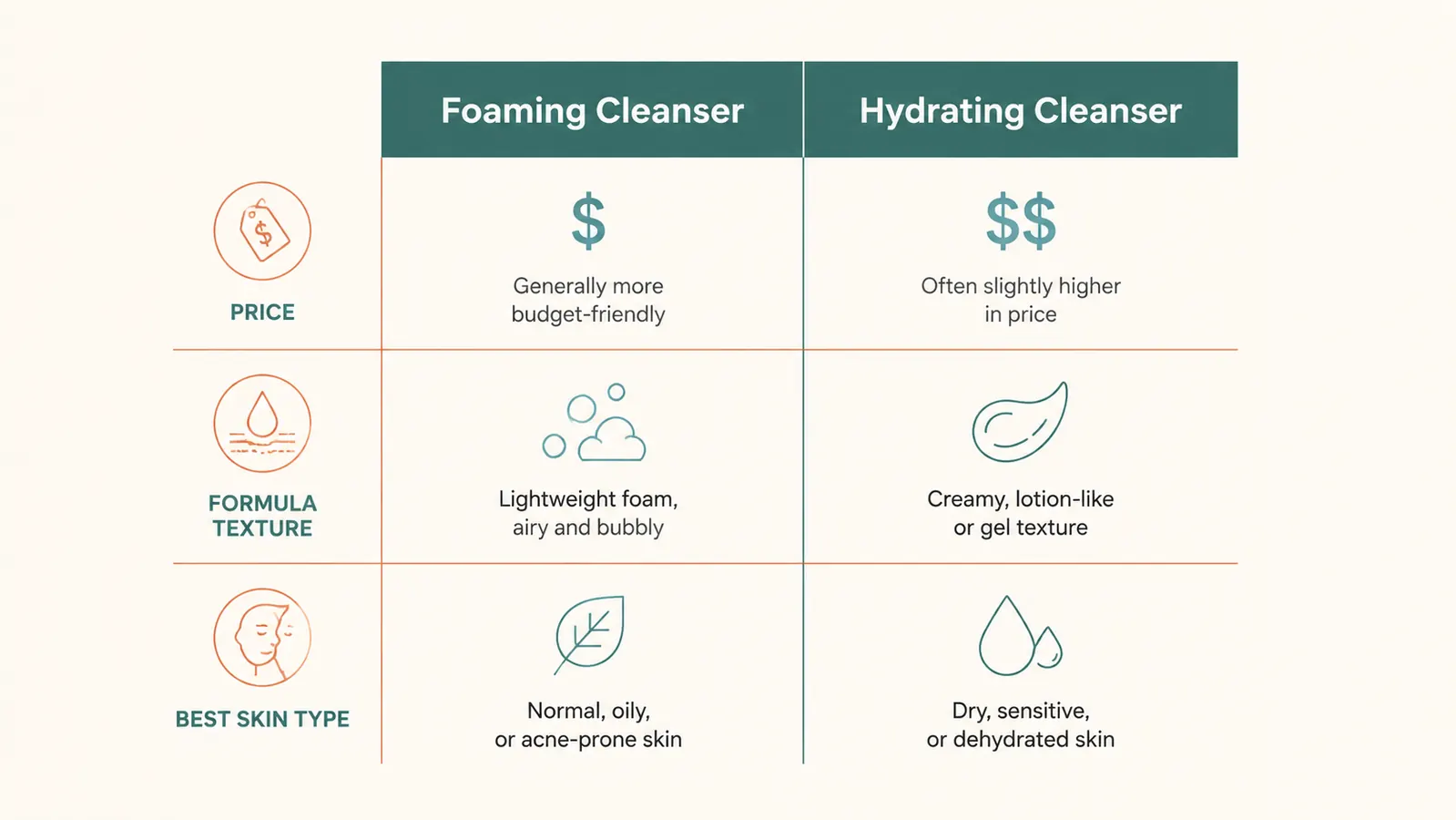
| CeraVe Foaming Cleanser | Hydrating Cleanser | |
|---|---|---|
| Price (current) | Budget-friendly for 16 oz | Budget-friendly for 16 oz |
| Formula Texture | Gel that foams into a light lather | Milky lotion, does not foam |
| Best Skin Type | Oily, combination, acne-prone | Dry, sensitive, eczema-prone |
| Key Actives | Ceramides, niacinamide, hyaluronic acid | Ceramides, hyaluronic acid, cholesterol |
| Oil & Makeup Removal | Removes sunscreen and light makeup fully | Leaves a light residue on heavier makeup days |
| Post-Rinse Tightness | None reported on oily or combo skin | Virtually none, even on very dry skin |
| Fragrance | Fragrance-free | Fragrance-free |
| Dermatologist Recommended For | Oily and acne-prone skin, rosacea-adjacent oiliness | Eczema, dry skin, post-procedure sensitive skin |
Where the Foaming Cleanser Wins
If your skin gets shiny by mid-afternoon, or you deal with blackheads across your nose and chin, the foaming version does something the hydrating one can't: it actually cuts through oil. I switched to it during a stretch of long, sweaty summer shifts where I was wearing sunscreen every day and needed something at night that would strip that off completely instead of just moving it around. The lather isn't dramatic, it's a light foam, not a shaving-cream cloud, but it's enough to leave skin genuinely clean rather than just damp.
The niacinamide is the other piece that matters here. Over about six weeks of nightly use, the redness around my nose and the general oil sheen by 3pm both noticeably calmed down. That's not something the hydrating cleanser is formulated to touch at all, since it doesn't contain niacinamide. For anyone dealing with combination skin, oily T-zone and drier cheeks, this is usually the better starting point, since it handles the oily parts without being so aggressive that it wrecks the drier parts too.
It's also just a more thorough cleanser in general. On the week I deliberately used it during a dry, cold snap, I did notice a little more tightness than usual, but it never turned to flaking, and a regular moisturizer right after fixed it within minutes. That gave me more confidence that most people with normal-to-oily skin can use it year-round without needing to switch formulas seasonally, which isn't something I expected going in.
Where the Hydrating Cleanser Wins
My partner has genuinely dry, easily irritated skin, the kind that gets tight and flaky in winter regardless of what moisturizer she layers on top. She tried the foaming cleanser first because it was already in the house, and within a week her cheeks were tight and slightly flaking around the nose, even though the label says it's gentle. That's not a manufacturing flaw, it's just a stronger surfactant doing exactly what it's built to do on skin that doesn't have oil to spare.
Switching her to the hydrating cleanser solved it within days. It cleans without pulling at the skin barrier, which matters a lot if you already run dry or you're dealing with eczema-prone patches. She uses it as both a morning splash and a night cleanser now, and there's no tight, squeaky feeling afterward, ever. If you've read the word 'squeaky clean' on a cleanser bottle and thought that sounded good, that's usually a sign your barrier is being stripped, not properly cleaned. The hydrating version never does that.
The week I forced myself to use it during heavy sunscreen wear, it genuinely fell short. My skin felt slightly filmy by the second day, like there was a light layer of something still sitting on it that a splash of water alone wasn't lifting. For dry or sensitive skin that isn't dealing with heavy oil or sunscreen buildup, that tradeoff is worth it. For anyone sweating through a workday or wearing SPF daily, it starts to feel like it's not quite finishing the job.
Oily by noon? This is the one that actually keeps up.
CeraVe Foaming Facial Cleanser is the version built for skin that produces real oil and needs a full, thorough clean without stripping the barrier bare. Check today's price and see the current deal on Amazon.
Amazon Check Today's Price on Amazon →What They Have in Common
It's worth saying plainly that both cleansers are gentle by drugstore standards. Neither one contains sulfates in the harsh, strip-everything sense, both are fragrance-free, and both are the kind of thing a dermatologist would hand you as a safe default rather than something to be cautious about. Neither stings, neither burns, and neither left any breakout reaction on either of our skin over months of daily use. If you're coming from a foaming face wash loaded with fragrance and sulfates, either CeraVe option is going to feel like a step up, the real question is just which direction of 'gentle' your skin actually needs.
Both also play well with actives layered on top, which matters if you're already using a retinoid, an exfoliating acid, or a prescription treatment. Neither cleanser fights with those products or leaves skin so stripped that a follow-up treatment stings going on, which is a common complaint with harsher foaming cleansers from other brands. I've used the foaming version the same nights I applied a retinoid without issue, and my partner has done the same with the hydrating version and a prescription rosacea cream, no added irritation from the cleanser itself in either case.

The Price and Value Question
Both bottles run close to the same price for the same 16 ounce size, so cost isn't really a deciding factor here, and I'd caution against picking based on whichever one happens to be a dollar or two cheaper on a given week. A 16 ounce bottle used twice a day realistically lasts two to three months in our house, which puts the true cost well under what most specialty cleansers charge for a fraction of the size. The value case for both comes down to using the right one for your skin type rather than shopping on price alone, since using the wrong formula, even a cheap one, usually just means buying a second bottle later anyway.
If you're not sure which camp your skin falls into, it's worth grabbing the smaller size of whichever one you're leaning toward before committing to the large pump bottle. A few weeks of daily use will tell you more than any ingredient list can, and swapping formulas isn't a big loss either way since both bottles get used up eventually in a normal skincare routine.
Who Should Buy Which
Go with the foaming cleanser if your skin gets oily or shiny within a few hours of washing, if you wear daily sunscreen or light makeup you need fully removed, or if you deal with occasional breakouts along the T-zone. Go with the hydrating cleanser if your skin tends toward dry, flaky, or reactive, if you've been diagnosed with eczema or rosacea, or if you've noticed tightness after washing with almost anything else you've tried. Combination skin can honestly go either way, but I'd start with the foaming version and only switch to hydrating if you notice dryness creeping in on the cheeks.
Some people, myself included, end up keeping both, using the foaming version most days and switching to the hydrating one during dry winter stretches when the air alone is enough to tip the skin toward flaky. If you're only buying one bottle to start, though, match it to whichever problem shows up more often on your face: shine and clogged pores point to foaming, tightness and flaking point to hydrating.
Same brand, same barrier support, built for different skin.
If your skin runs oily or combination and you're tired of cleansers that either leave a film or strip you dry, CeraVe Foaming Facial Cleanser is the one to try first. See the current price on Amazon before you decide.
Amazon Check Today's Price on Amazon →