

I've been driving long-haul for 24 years, and every winter for about the last fifteen of them, my hands split open at the knuckles like clockwork. Cold docks, diesel on my fingers, forty hand washes a day at truck stops, and stretches where the humidity in the cab sits somewhere south of a desert. By December my thumbs would crack at the first joint and just stay that way until spring. I started using O'Keeffe's Working Hands cream on the first cold snap in November, morning before my pre-trip inspection and again at night in the cab, and I didn't miss more than a handful of days through the following May. This is what six straight months of that actually did, not a two-week impression from a jar that's still mostly full.
I want to be upfront that I've tried a lot of hand creams. Bag Balm, plain Vaseline, whatever lotion my wife had in the bathroom, a tub of mechanic's grease-cutting hand soap that supposedly moisturized too. Nothing held up past about hour four of a driving shift. What made me stick with this one long enough to write an honest review is that it's the first product that actually closed the cracks instead of just sitting on top of them and making my hands feel greasy on the wheel.
The Quick Verdict
A genuinely heavy-duty hand cream that closes cracked, split skin fast and keeps it closed with daily use. Not a light everyday lotion, and the smell isn't for everyone, but it's the only thing that's gotten my winter knuckles through a full season without splitting.
Amazon Check Today's Price →Still watching your knuckles split open every time it gets cold or dry?
O'Keeffe's Working Hands is built for skin that's already cracked, not just dry, with a concentrated glycerin and allantoin formula that seals and holds rather than just sitting on the surface. Check today's price on Amazon and see if it holds up on your hands the way it did on mine.
Amazon Check Today's Price on Amazon →How I've Used It
My routine is simple because it has to be. I keep the jar in the truck's center console, not buried in a bag somewhere I'll forget about it. Every morning before my pre-trip walk-around, I rub a dime-to-nickel-sized amount into both hands, working it into the knuckles and around my nail beds where the cracking always starts first. At night, after my last load or delivery, I do it again, usually right before I climb into the sleeper, since that's the one stretch of the day my hands aren't immediately going back into gloves or a steering wheel.
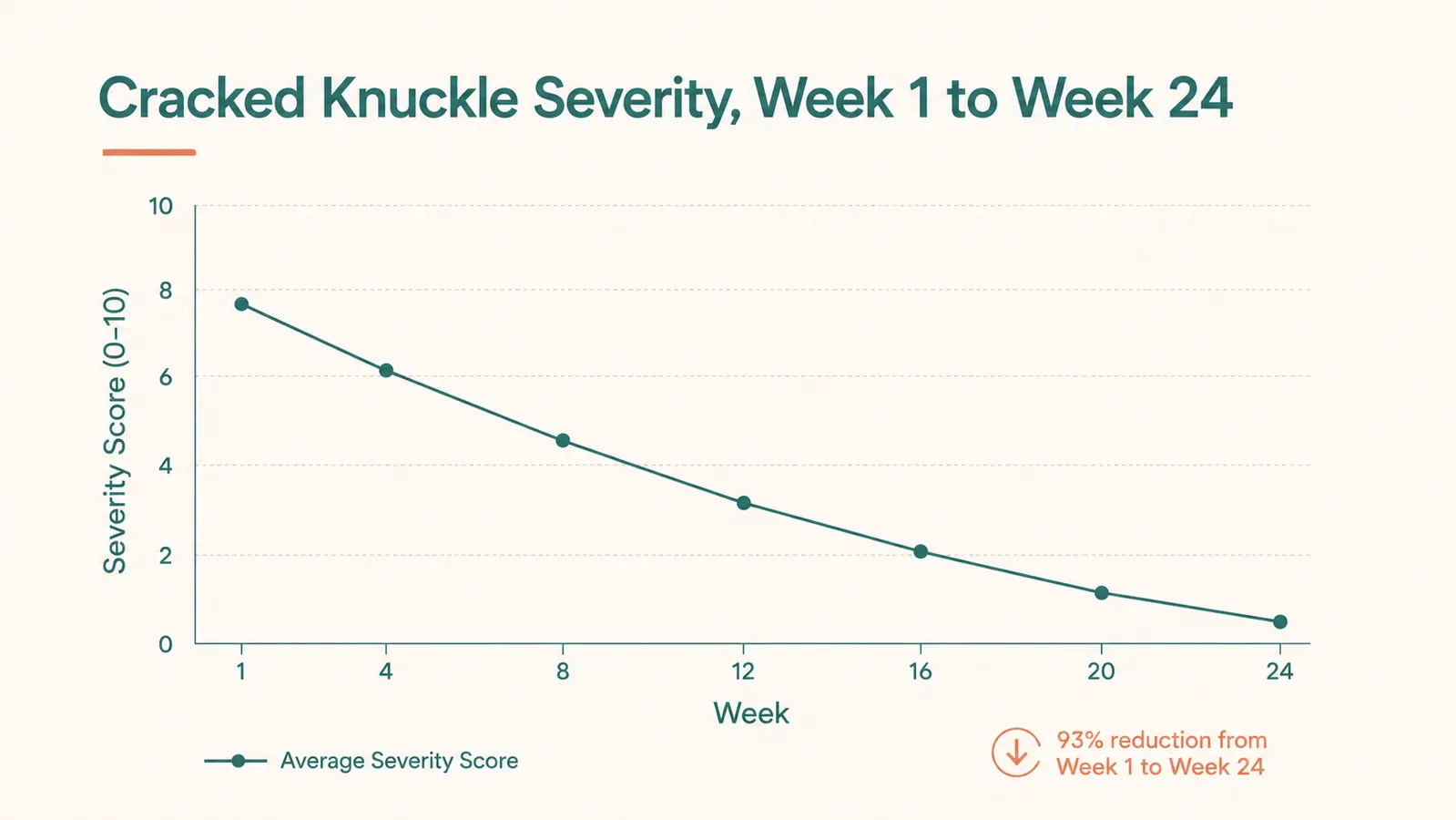
I started tracking this loosely in my phone notes in early December, mostly because my wife asked if the jar was actually doing anything or if I was just going to complain about my hands again in February like every other year. I rated crack severity on a one-to-five scale, one being smooth skin and five being open, bleeding splits, and I took a phone photo of my right hand every Sunday, same lighting, parked at the same truck stop routine.
I didn't change gloves, didn't switch hand soap, and I kept using the same harsh industrial soap at the truck stops I always use, because I wanted this to be a real test of the cream and not a test of my whole routine changing at once. I also didn't start drinking more water or doing anything else different, which matters because I know somebody's going to ask if it was really the cream or just a milder winter. It wasn't a milder winter. We had two ice storms in Wyoming that January that shut half the interstate down.
What's Actually In It, and Why It Works on Damaged Skin
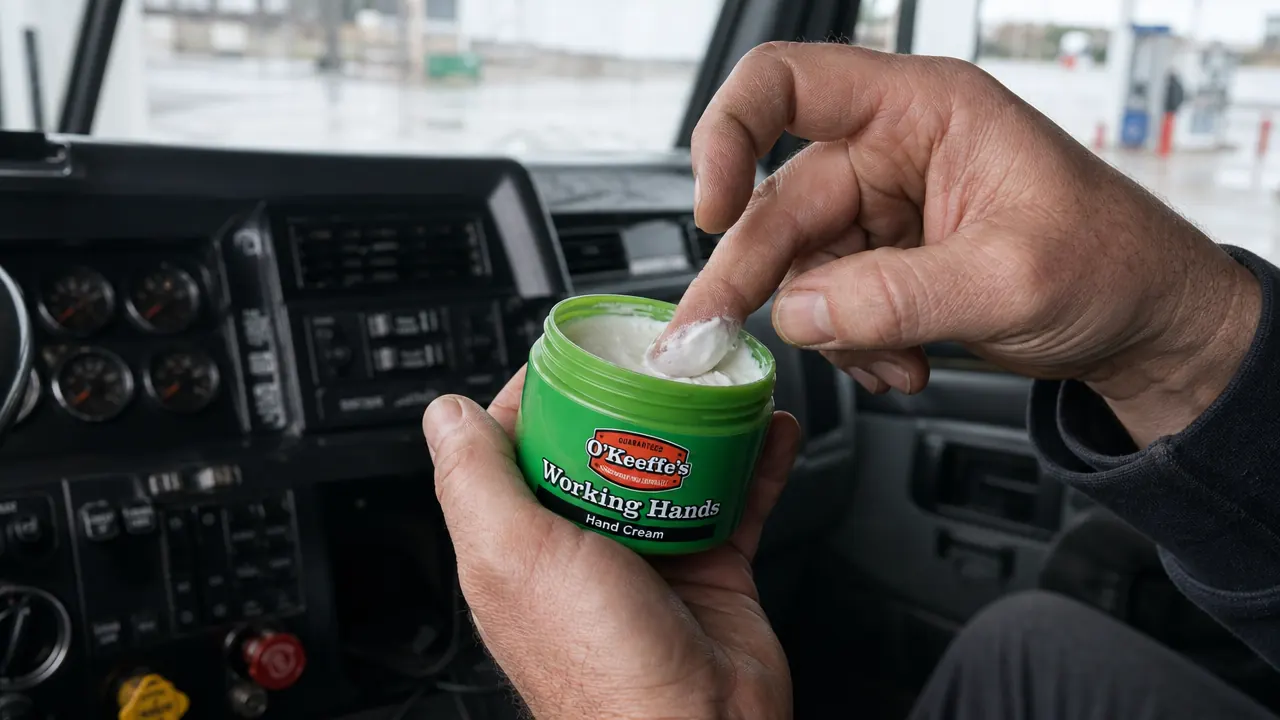
The formula is built around a concentrated glycerin base with allantoin, which is the ingredient that actually convinced me to try this over another tub of Vaseline. Glycerin pulls moisture into the skin rather than just coating it, and allantoin is a known skin-protectant compound that shows up in a lot of wound-care and cracked-skin products for a reason, it helps soften and smooth damaged tissue instead of just blocking air and water on top of it.
That's the real difference from petroleum-jelly-only products. Vaseline sits on the surface and traps whatever moisture is already there, which is fine for mild dryness but does close to nothing for a knuckle that's already split open. This cream actually absorbs into the cracked skin instead of floating on it, and within the first week I noticed it didn't leave that slick, can't-grip-anything film on my hands the way straight petroleum jelly does when I've got a steering wheel and a clipboard to deal with in the same ten minutes.
It's fragrance-free in the sense that there's no perfume added, but it does have a distinct, slightly medicinal smell from the base ingredients themselves. I'll get into that more later because it's the one thing that almost made me put the jar down before I gave it a real shot. Texture-wise, it goes on thick, almost like a dense lotion crossed with a light salve, and it takes a solid thirty to forty seconds of rubbing before it fully sets into the skin instead of sitting greasy on top.
How My Hands Changed Over 6 Months
Week one, honestly, not much. My hands felt less tight by the end of the day, but the cracks on both thumbs and my right index knuckle were still there, still catching on paperwork and stinging when I washed up at truck stops. I'd been burned by hand creams before that promised fast results and delivered nothing, so I wasn't expecting much different here either.
By week three something actually shifted. The crack on my right index knuckle, the one that had been open since Thanksgiving, closed up. Not faded, closed. My crack severity score, which had been sitting at a three or four most weeks in November, dropped to a one or two by early December and mostly stayed there. I remember calling my wife from a rest stop outside Amarillo just to tell her my hands didn't hurt when I gripped the fuel nozzle that morning, which is a strange thing to be excited about but anyone who's had winter hands like mine will get it.
The stretch from week eight through week sixteen, which lined up with the worst of the cold and two separate ice storms, was the real test. My hands still got dry and tight from the cold and the constant washing, but they didn't split. That's the difference I care about most. Dry and tight I can live with. Split open at the knuckle so it stings every time I grip a clipboard or a fuel hose, that's what used to ruin my winters, and it just didn't happen this year.
By month five and six, my hands had settled into something I genuinely hadn't had in over a decade during winter months, consistently smooth knuckles with no open cracks, even through a stretch of single-digit mornings in Nebraska in February. I still needed to reapply daily, this isn't a cream you use for two weeks and then stop needing, but the maintenance routine itself became easy once I built it into my morning and night stops.
What I Tried Before This
Before this I was a Bag Balm guy for about six years. It works reasonably well on truly raw, chapped skin, but the texture is thick and waxy in a way that made it hard to use before I needed my hands back on the wheel or a clipboard within a few minutes. I'd end up wiping most of it off before it had time to actually absorb, which probably explains why it never fully solved my cracking problem even after years of using it.
I also spent one winter on Neutrogena Norwegian Formula, which is a fair, lighter-weight option and worth mentioning since it's the other name that comes up in this same category. It absorbs faster and feels less heavy, which some drivers I know actually prefer for daytime use. But on my worst cracked knuckles it didn't have the same closing power, it kept my hands from getting worse without really healing what was already split. For me, the tradeoff wasn't close. I needed the heavier formula to actually undo the damage, not just maintain it.
The Tradeoffs Nobody Mentions
First, the smell. It's not unpleasant exactly, but it's distinct, a little medicinal, almost like a first-aid ointment. I noticed it more in the enclosed cab than I expected, especially fresh out of the jar before it's rubbed in. It fades within a few minutes, but if you're sensitive to scent, or you're going straight into a meeting with a customer after applying, that's worth planning around.
Second, it needs real time to absorb. If you're in a rush, that thirty-to-forty-second window before it fully sets can feel inconvenient, and I definitely had a few mornings where I ended up with cream residue on my logbook because I didn't wait it out. Plan for it, don't apply it thirty seconds before you need to grip something.
Third, the jar format is a little impractical for the truck. I ended up transferring a small amount into a travel tin I kept in the door pocket for quick top-ups during the day, because digging the full jar out of the console every time wasn't realistic mid-route. Minor, but worth planning for if you're using this on the job rather than at home.
Fourth, and this is the one that matters most for anyone with genuinely severe eczema or a dermatologist-diagnosed skin condition, this is a heavy-duty moisturizer and crack-repair cream, it's not a medicated treatment. It did nothing for a patch of eczema I get on my left wrist most winters. That needs an actual prescribed treatment, and I wouldn't want anyone assuming this replaces that.
What I Liked
- Actually closes cracked, split knuckles instead of just moisturizing around them
- Glycerin and allantoin base absorbs into damaged skin rather than sitting on top like petroleum jelly
- Held up through two ice storms and months of harsh truck stop hand soap without reintroducing cracking
- Non-greasy once fully absorbed, doesn't compromise steering wheel or clipboard grip
- One jar lasted the full six-month stretch with twice-daily use
Where It Falls Short
- Distinct medicinal scent that some people won't love
- Needs thirty to forty seconds to fully absorb before hands are usable again
- Jar format is awkward for on-the-go application, worth transferring to a smaller tin
- Won't touch a diagnosed skin condition like eczema or psoriasis on its own
My hands didn't hurt when I gripped the fuel nozzle that morning, and after fifteen winters of split knuckles, that's the whole review right there.
Who This Is For
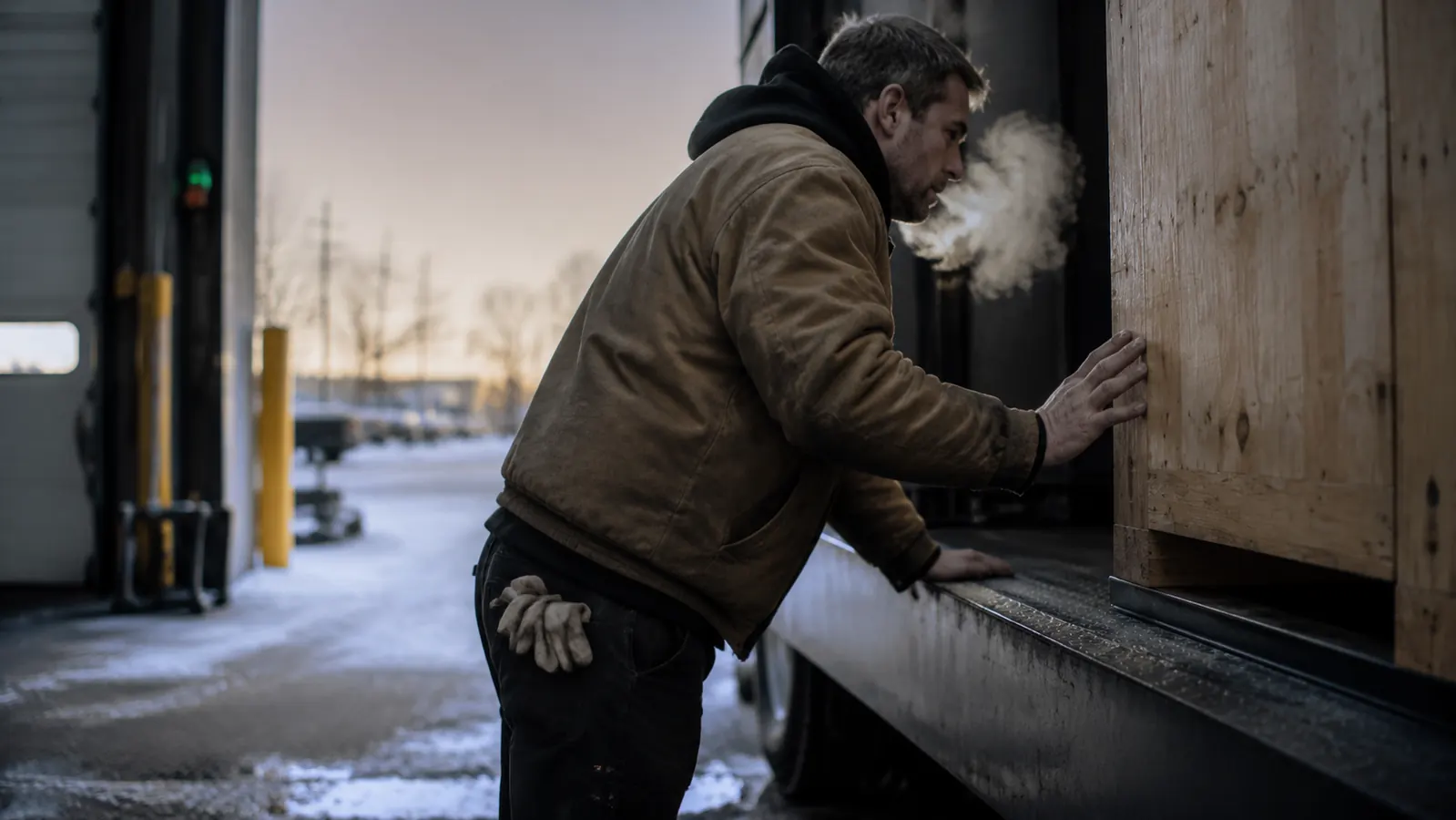
If your hands are cracking, not just dry but actually splitting open at the knuckles from cold, constant washing, or manual work, this is worth trying before you assume nothing's going to fix it. It's a strong fit for anyone in a job that keeps their hands wet, dirty, or exposed to the cold for hours at a time, drivers, warehouse and dock workers, mechanics, anyone in food service washing their hands dozens of times a shift, or anyone dealing with the same yearly winter cracking I used to fight every single season.
Who Should Skip It
If your skin is just mildly dry rather than actually cracked, a lighter everyday lotion will probably serve you better day to day, this formula is heavier and more concentrated than you need for basic maintenance. And if you're dealing with a diagnosed skin condition like eczema or psoriasis, treat this as a supplement to whatever your dermatologist has you on, not a replacement for it.
Six months in, and this is still the jar riding shotgun in my truck.
If winter cracks your knuckles the same way it's cracked mine for fifteen years, O'Keeffe's Working Hands is worth giving a real month before you judge it. Check today's price on Amazon and see how it holds up on your hands.
Amazon Check Today's Price on Amazon →