

I've had rough, bumpy skin on the backs of my arms since I was about thirteen, and by my mid-twenties it had spread to the fronts of my thighs too. A doctor finally put a name to it at a routine physical back in 2019: keratosis pilaris. Harmless, she said, just clogged hair follicles that turn into a permanent case of chicken-skin texture. Harmless didn't stop me from wearing long sleeves through two summers of driving a truck with a cab that never quite feels humid enough. I started using CeraVe SA Lotion for Rough and Bumpy Skin on my arms and thighs every morning and night starting the first week of February, and I kept it up daily straight through the first week of July. This is what five months of that actually looked like, not a rushed two-week first impression.
I'm not new to trying things for this. I've had a tub of a drugstore exfoliating scrub in my shower caddy on and off for a decade, a dry-brush I used for exactly nine days, and a prescription urea cream from that same 2019 doctor visit that worked but felt like putting on a thin layer of glue every night. What made me stick with this lotion long enough to actually write about it is that it's the first thing that fit into a daily routine without feeling like a chore, and the results held up even through months of recirculated cab air that dries out everything it touches.
The Quick Verdict
A genuinely effective exfoliating body lotion for keratosis pilaris style bumps, with a mild sting some skin needs a week or two to adjust to. Not a cure, but it's the closest thing to one I've tried.
Amazon Check Today's Price →Tired of long sleeves in July because of bumpy, sandpaper-rough arms?
CeraVe SA Lotion combines salicylic acid, lactic acid, and hyaluronic acid to gently exfoliate rough, bumpy skin while still supporting the barrier underneath. Check today's price on Amazon and see if it fits your routine.
Amazon Check Today's Price on Amazon →How I've Used It
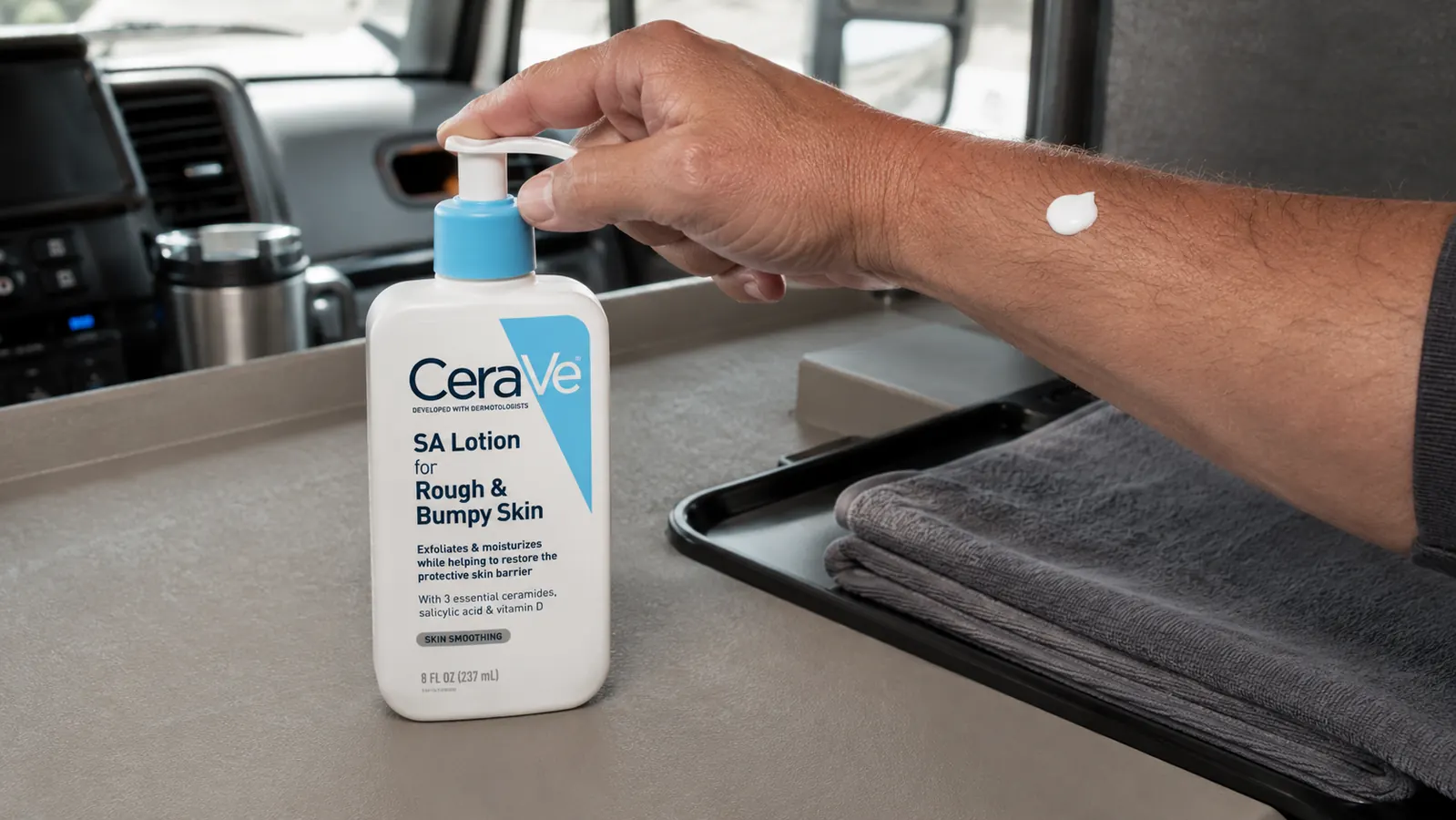
My routine is simple and I kept it that way on purpose. Right out of the shower while my skin is still a little damp, I apply a quarter-sized amount to the backs of each arm and a slightly bigger amount to the fronts of both thighs, rubbing it in until it's fully absorbed. Same thing again before bed, usually while I'm parked for the night wherever the route has landed me that day. No scrubbing, no exfoliating gloves, just the lotion worked in with clean hands.
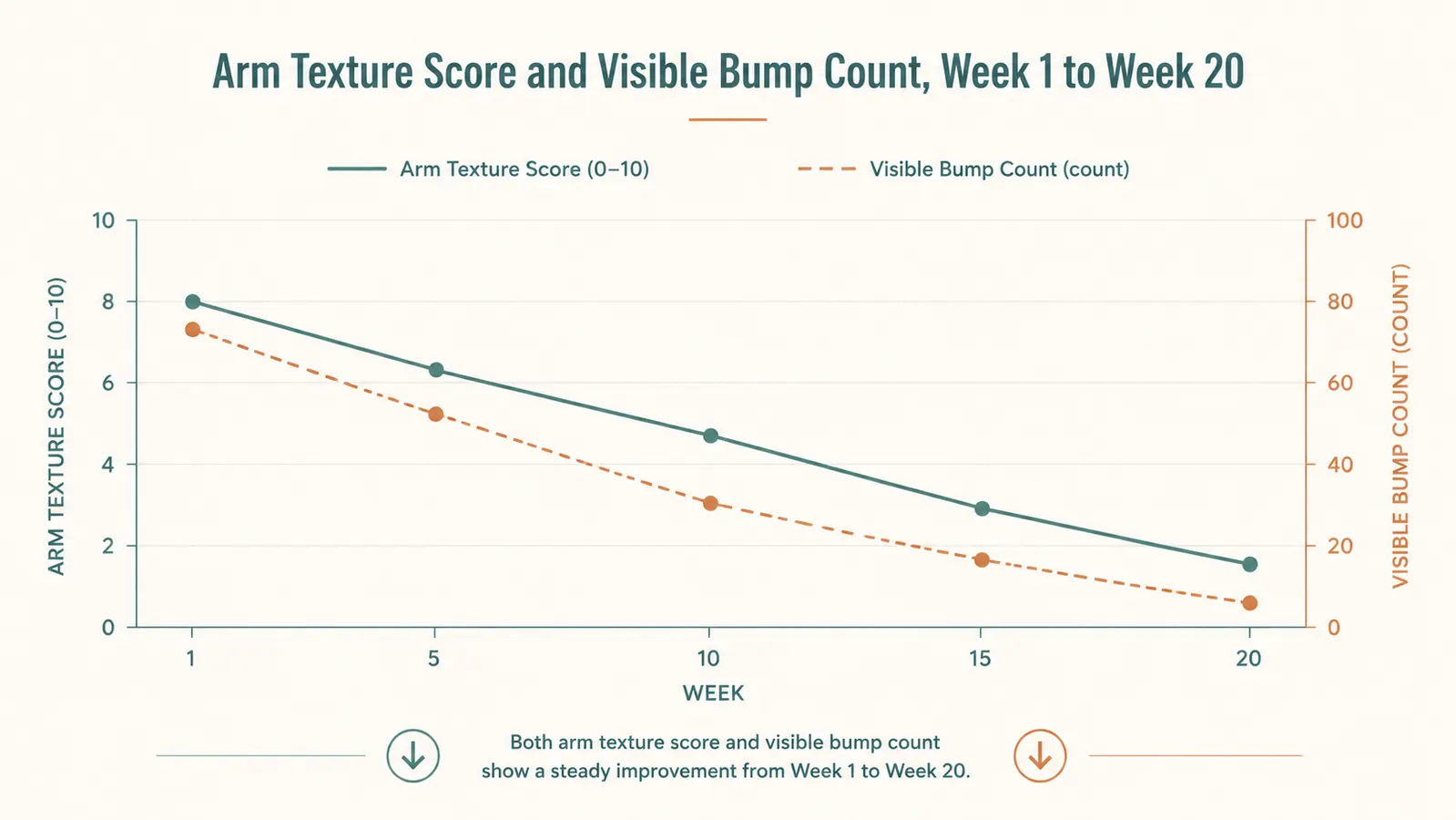
I started tracking this loosely on my phone in week two, mostly because I've been burned before by convincing myself something was working when it wasn't. I rated texture on a rough one-to-five scale, five being the worst, and I counted visibly raised bumps on a two-inch patch of my left forearm once a week, same day, same overhead light in whatever bathroom I happened to be near.
I didn't change my body wash, my laundry detergent, or my diet during this stretch, and I kept using the same sunscreen on exposed skin the whole time. Routes took me through both dry, low-humidity stretches out west and a few weeks of thick, sticky air back east, so this wasn't tested in one climate bubble. I wanted a real test of the lotion, not a test of ideal conditions that don't match how most people actually live.
What's Actually in the Bottle, and Why It Matters
The formula is built around salicylic acid and lactic acid working together, plus hyaluronic acid and niacinamide, and a handful of ceramides to help the barrier hold up under that exfoliation. Salicylic acid is the ingredient doing the real work here. It's oil-soluble, which means it can get down into the clogged follicle instead of just sitting on top of dead skin, and that's the actual mechanism behind smoothing out keratosis pilaris bumps rather than just polishing the surface.
Lactic acid is the second piece, and it's a gentler alpha hydroxy acid that works more on the surface layer, loosening the buildup of dead skin cells that make the texture feel like sandpaper in the first place. Together the two acids are hitting the problem from two different angles instead of relying on one ingredient to do everything, which is part of why I think this outperformed the single-ingredient scrubs I'd tried before it.
The ceramides and hyaluronic acid are there to keep exfoliation from turning into irritation. Any acid strong enough to actually clear a clogged follicle is also strong enough to strip a barrier if that's all it did, so having ceramides in the same bottle is less of a marketing bullet point here and more of a genuine reason this held up to twice-daily use for five months without my skin getting angrier over time.
Niacinamide shows up further down the ingredient list, and I went in with modest expectations for what it could add in a body lotion versus a leave-on serum. It didn't do the heavy lifting, the acids handled that, but I noticed less redness around the bumps as the months went on, and niacinamide's reputation for calming inflamed skin is at least a plausible piece of that.
How My Skin Changed Over 5 Months
Weeks one and two, mostly just adjustment. My skin stung faintly for the first thirty seconds after applying, especially on my thighs where the texture was worse, and I didn't see much visible change yet. I almost quit around day nine because the sting made me second-guess whether I was using too much, but I stuck with the amount on the label and it settled down.
By week four the sting had mostly faded to nothing, and that's when I started noticing an actual difference. My texture score, which had been sitting at a four out of five most weeks, dropped to a three. The bumps on my forearm patch went from around eighteen visibly raised spots to closer to twelve. Still rough to the touch, but noticeably less angry-looking under bright light.
Weeks eight through fourteen were the biggest stretch of visible change. My bump count on that same patch dropped to around six or seven, and my thighs, which had always been worse than my arms, finally started catching up. I want to be honest here, this didn't erase the keratosis pilaris. It's a genetic, chronic thing, and dermatologists will tell you that plainly. What it did was cut the visible severity roughly in half and take the texture from sandpaper to something closer to a light orange peel.
A coworker at a truck stop diner in May actually asked if I'd stopped wearing long sleeves because it had gotten warmer, and the honest answer was that I'd been wearing short sleeves for three weeks by then without thinking about it. That's a small moment, but it mattered more to me than any number on my tracking sheet.
By month five, my skin had settled into a new baseline. Still technically keratosis pilaris, still a little rough if you run a hand over it in bad light, but the raised, angry bumps that used to make me avoid short sleeves are mostly gone. The arc was gradual, not dramatic, and it took a full month before I trusted the improvement was sticking and not just a good week.
The Sting, and Other Tradeoffs Nobody Mentions
First and most important, this stings on application for the first couple weeks, especially if you have any small cracks or irritation already going on. That's the salicylic acid working, not a sign of an allergic reaction, but nobody warned me and I want to warn you. If it stings for more than thirty seconds or gets genuinely painful, stop and check with a doctor, that's not normal.
Second, it can make skin more sun-sensitive, which matters if you're outside a lot or, like me, spending hours with one arm resting on a truck window in direct sun. I started applying sunscreen on exposed skin during the day as a precaution and I'd genuinely recommend that to anyone using this regularly, not just as a box to check.
Third, the pump dispenses a thinner, more watery lotion than I expected from the jar-style products I'd used before. It absorbs fast, which I ended up liking, but if you're expecting a thick, heavy cream texture, the first application might surprise you. It's not a downside exactly, just a different feel than some competing exfoliating lotions.
Fourth, and I think this is the one that trips people up most: it takes a solid month before you see meaningful change, and it does nothing for the redness some people get alongside their bumps if that redness is a separate skin condition like eczema or rosacea. This is a keratosis pilaris and rough-texture product first, not a general redness fix.
What I Tried Before This
Before this I leaned on a drugstore exfoliating body scrub with sugar and jojoba beads, used maybe three times a week in the shower. It felt satisfying in the moment, but it never touched the actual clogged follicles underneath, it just polished the top layer, and the texture always crept back within a few days. I also tried a dry brush for about nine days before giving up, it left my skin red and irritated without any real improvement to show for it.
The prescription urea cream from my 2019 doctor visit actually worked reasonably well, but it had a thick, almost glue-like feel that made it a pain to apply before getting dressed, and refills meant an office visit I didn't always have time for on the road. This lotion gets me most of the way to that same result without the texture issue or the prescription hassle, which is the main reason it's what's actually in my bag now.
What I Liked
- Visibly reduced bump count and texture within four to six weeks
- Salicylic and lactic acid combination targets clogged follicles, not just surface texture
- Ceramides keep the barrier from feeling stripped despite daily acid exfoliation
- Fast-absorbing, no greasy residue under clothes or a seatbelt
- Reasonable cost per ounce for a two-acid exfoliating formula
Where It Falls Short
- Mild sting on application for the first one to two weeks
- Can increase sun sensitivity, sunscreen on exposed skin is worth adding
- Doesn't fully clear keratosis pilaris, it's a genetic, chronic condition
- Thinner, more watery texture than jar-style creams if you're used to those
It didn't erase the keratosis pilaris, but it cut the visible severity roughly in half, and that was enough to stop avoiding short sleeves.

Who This Is For
If you've got the classic keratosis pilaris look, small, rough, slightly raised bumps on the backs of your arms, thighs, or elsewhere, and you've been relying on scrubs or dry brushing that never gets past the surface, this is worth a real trial. It's also a solid fit if you deal with dry air regularly, whether that's a truck cab, an office with aggressive AC, or a dry climate, since the ceramides help offset the acids instead of compounding the dryness.
Who Should Skip It
If you have broken, cracked, or actively irritated skin in the area, start somewhere gentler and let your skin heal first, the acids here will sting more than usual on compromised skin. And if you're looking for something that clears texture in a week, this isn't it, the real change showed up closer to a month in, and if you're not ready for that timeline, the sting-then-wait process might frustrate you before it wins you over.
Five months in, this is still the lotion in my bag on every route.
If rough, bumpy skin has you reaching for long sleeves no matter the season, CeraVe SA Lotion is worth a real month-long trial before you judge it. Check today's price on Amazon and see how it fits your routine.
Amazon Check Today's Price on Amazon →