
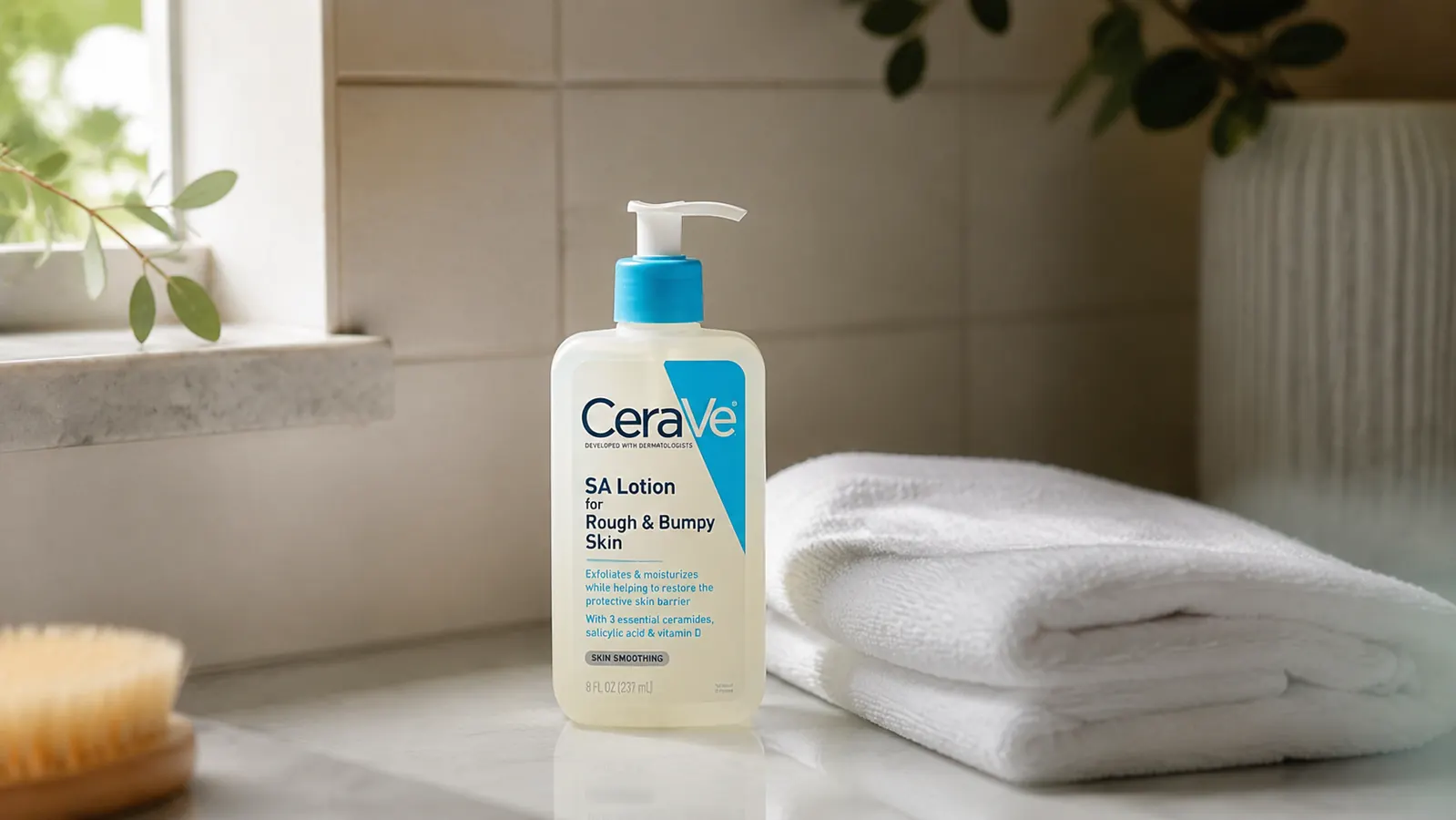
If you've got those small, rough, sandpaper-like bumps across the backs of your arms or the fronts of your thighs, you've probably already found both of these bottles while searching for a fix. CeraVe SA Lotion and AmLactin Daily Moisturizing Lotion are built to solve the exact same problem with the exact same basic strategy: a mild acid that helps the skin shed the thickened, clogged bumps instead of just moisturizing over them. I've spent hours in a driver's seat over the years, and that kind of sitting and friction is brutal on the backs of your thighs and upper arms. I ran both lotions on matching patches of my own rough skin for six weeks this winter to see which one actually earns a permanent spot in the bathroom.
The short answer: CeraVe SA Lotion is the one I kept using every single day without fail, and it's the one I'd tell a friend to buy first. It smooths the texture just as effectively over time, absorbs faster, and never once made my skin sting or burn, even on nights when I applied it right after shaving. AmLactin is stronger on paper and can work a little faster on truly stubborn bumps, but that strength comes with a real tradeoff in comfort that made it harder to use consistently. Consistency is the whole game with these products, so that tradeoff matters more than the spec sheet suggests.
What's Actually Causing the Bumps
Before comparing the bottles, it helps to know what you're actually treating. Those small, rough bumps on the backs of the arms and the fronts of the thighs are almost always keratosis pilaris, a common and harmless condition where dead skin cells build up and plug the hair follicles instead of shedding normally. It's not acne, it's not an allergy, and scrubbing at it with a loofah or a body scrub usually makes it worse, not better, because it irritates the skin without actually clearing the plugged follicle underneath. What it needs is a chemical exfoliant, something that dissolves the buildup at the follicle level rather than physically sanding the surface.
That's exactly what both of these lotions are built around. CeraVe SA Lotion uses a combination of salicylic acid and lactic acid, while AmLactin leans almost entirely on a high concentration of lactic acid alone. Both acids work by loosening the glue that holds dead skin cells together, letting the plugged follicles clear out gradually with regular use. Neither one works overnight. Anyone promising a smooth-skin miracle in three days on a rough patch that's been building up for years is overselling it, and both of these brands are honest enough not to make that claim on the label.
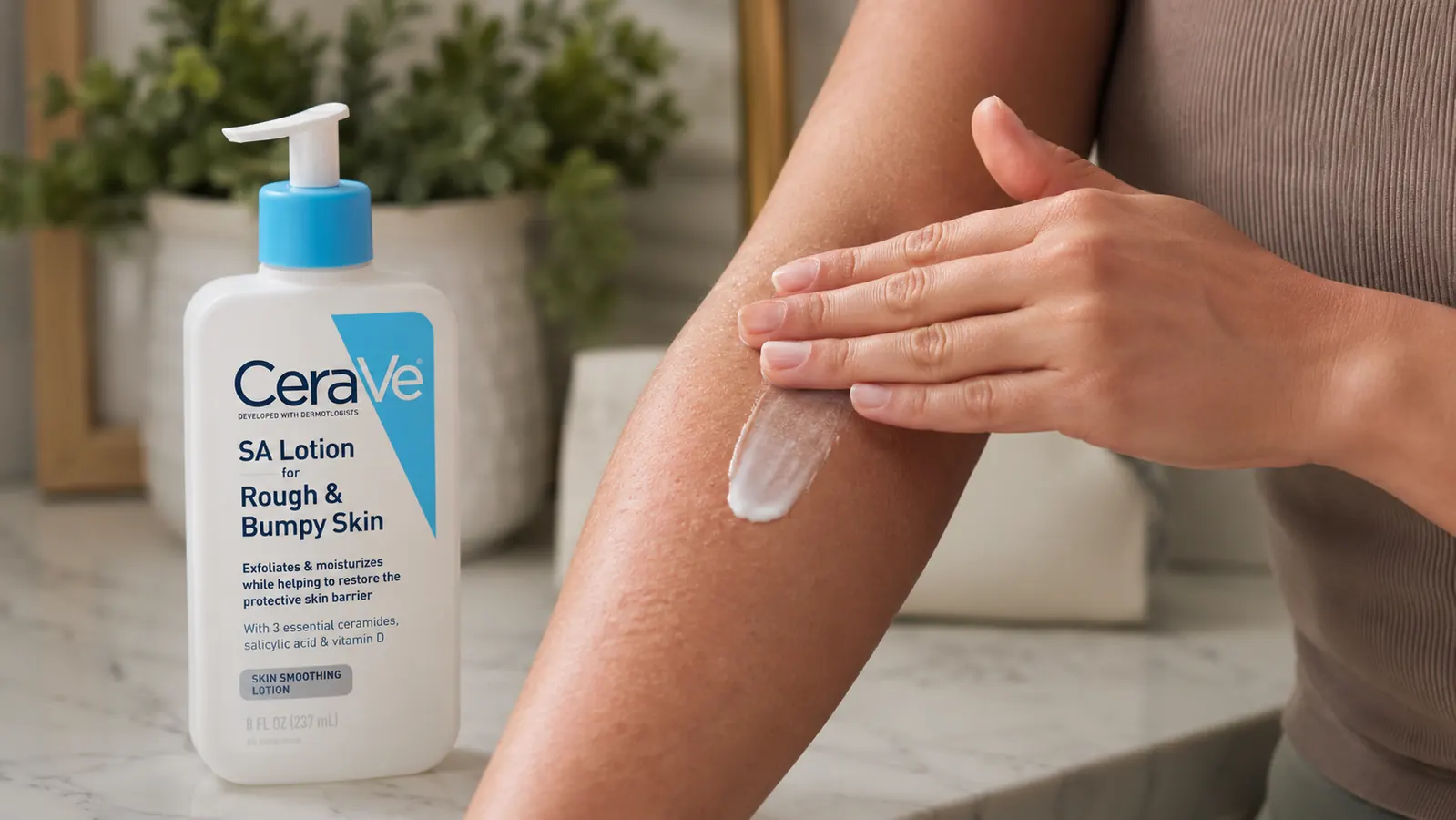
How I Tested Both
I picked two roughly matching patches, one on each forearm, and one on each thigh, since keratosis pilaris tends to show up in near-mirror patterns on both sides of the body anyway. CeraVe SA Lotion went on one arm and one thigh every night after showering, AmLactin went on the other side on the same schedule, and I kept everything else identical: same soap, same shaving routine, same amount of time in a truck cab that dry winter air was already working against me. Six weeks is enough time to see real texture change with either acid, since most dermatology guidance puts visible smoothing somewhere between three and six weeks of nightly use.
I also paid close attention to how each one felt going on, not just how the skin looked at the end, because that's the part most comparisons skip. A lotion that works but that you dread applying is a lotion you'll eventually stop using, and a bottle sitting unused in a cabinet doesn't smooth anything. I tracked sting on application, how long each one took to fully absorb before I could put on a shirt, and whether either one left any residue on my sheets or clothing overnight.
The Core Difference: Formula and Feel
CeraVe SA Lotion pairs its salicylic and lactic acid blend with ceramides, hyaluronic acid, and niacinamide, the same barrier-support trio CeraVe uses across most of its lineup. That combination matters here because it's actively repairing and hydrating the skin barrier at the same time the acids are working to clear buildup, which is a big part of why it never stung on my skin, even applied right after shaving. The texture is a true lotion, lightweight and quick to soak in, and it doesn't leave any tacky film behind even a few minutes after application.
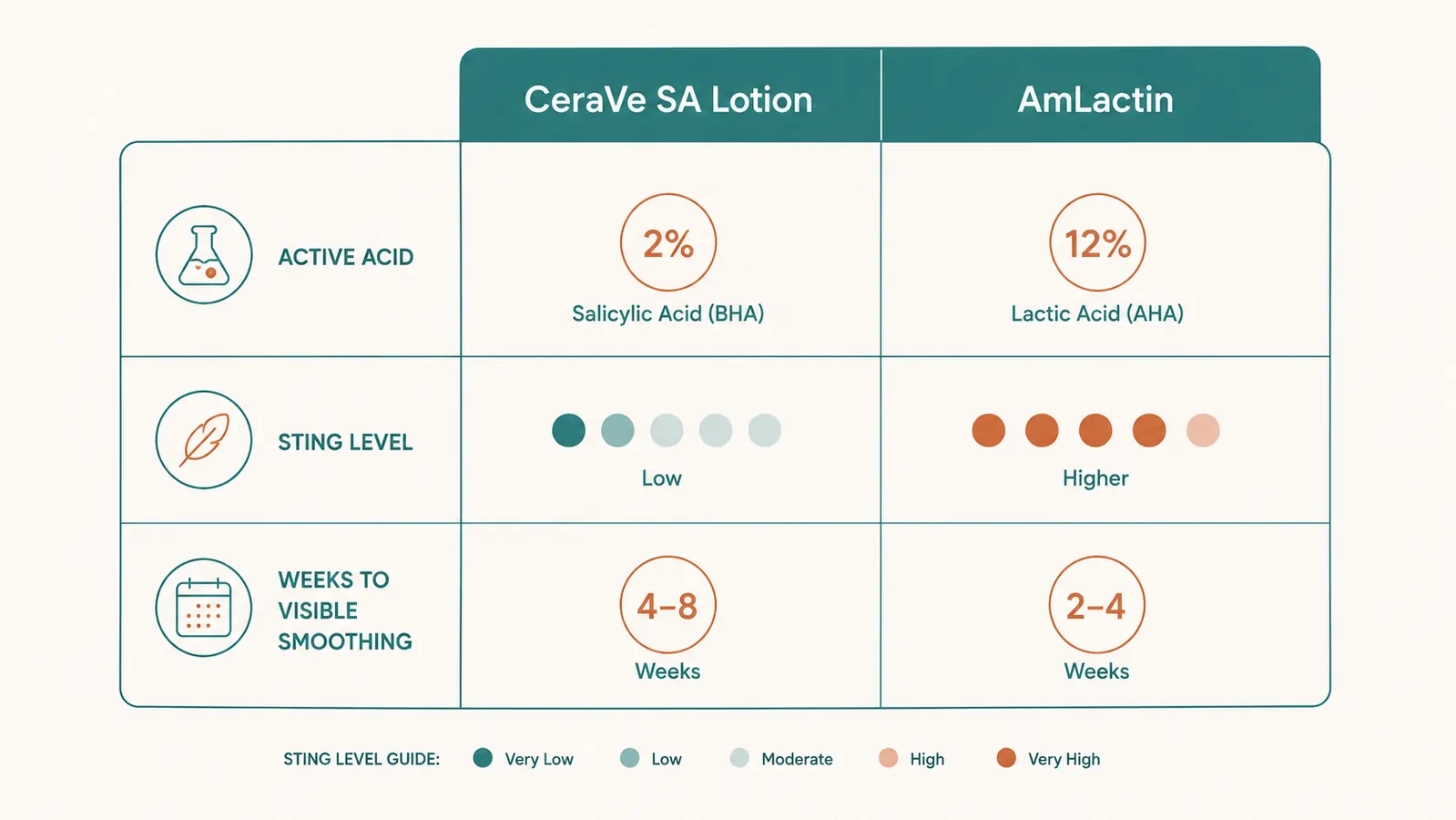
AmLactin skips most of that supporting cast and puts its effort almost entirely into a 12 percent lactic acid concentration, which is genuinely higher than what you'll find in CeraVe's blend. It does include ceramides for barrier support, but it's a single-ingredient approach compared to CeraVe's three-part combination. The texture is noticeably thicker, closer to a cream than a lotion, and it stays slightly tacky on the skin for a few minutes longer before fully absorbing. On my thigh patch, that meant waiting a bit longer before I could comfortably pull on pajama pants without it dragging.
| CeraVe SA Lotion | AmLactin | |
|---|---|---|
| Active Exfoliant | Salicylic acid + lactic acid blend | 12% lactic acid (higher single-acid concentration) |
| Barrier Support Ingredients | Ceramides, hyaluronic acid, niacinamide | Ceramides only |
| Texture on Application | Lightweight lotion, absorbs in under a minute | Thicker cream, slightly tacky for several minutes |
| Sting on Freshly Shaved or Broken Skin | Mild, rarely noticeable in six weeks of testing | Noticeable, especially in the first two weeks of use |
| Scent | Virtually fragrance-free | Light clinical scent |
| Packaging | Pump bottle, easy one-handed use after showering | Squeeze tube, easy to apply more than needed |
| Best Suited For | Daily maintenance, sensitive skin, first-time users of an acid lotion | Stubborn, long-standing rough patches once skin has adjusted |
| Time to Noticeable Smoothing | 3 to 4 weeks of consistent nightly use | 2 to 3 weeks, with higher risk of irritation along the way |
Where CeraVe SA Lotion Wins
The single biggest advantage CeraVe SA Lotion has is that it never once made me want to skip a night. Six weeks of nightly use is a real commitment, and the only way to actually see results is to not fall off the routine somewhere around week two because your skin is irritated or tight. The ceramide and hyaluronic acid base kept the treated patches feeling hydrated even as the acids worked underneath, and I never noticed the flaking or tightness that sometimes shows up with stronger exfoliating treatments.
It also handled friction and shaving without complaint, which matters more than it sounds like it should. I shave my forearms occasionally for a dermatology appointment prep routine, and applying CeraVe SA Lotion right afterward never stung, even on skin that was technically slightly irritated from the razor. That's the niacinamide doing its job, calming the skin at the same time the salicylic and lactic acid are working on the buildup. AmLactin on the same freshly shaved skin was a different story, which I'll get into below.
By week four, the arm patch treated with CeraVe SA Lotion was noticeably smoother to the touch, not glass-smooth, keratosis pilaris rarely disappears entirely, but the sandpaper feeling was clearly softening, and the redness around a few of the more inflamed bumps had calmed down. The pump bottle also made it genuinely easier to stick with the routine. No cap to find, no squeezing a stubborn tube one-handed while standing in a cold bathroom after a shower, just a quick pump and go.
Where AmLactin Wins
AmLactin's higher lactic acid concentration is a real advantage for skin that's plateaued on gentler treatments and just isn't budging. If you've already tried a basic moisturizer or an even milder acid lotion for months with no change, AmLactin's strength is exactly the kind of step-up that can finally move the needle on truly stubborn, long-standing bumps. On my thigh patch, which had the more severe texture of the two spots I tested, AmLactin did produce visible smoothing about a week faster than the CeraVe side.
It also has a more clinical, no-nonsense feel that some people genuinely prefer, especially if you've used prescription-strength treatments before and are used to that kind of sensation as a sign something is actually working. The tube format, while easier to overuse, also means you can control exactly how much comes out for a targeted patch rather than pumping out more lotion than you need for a small area, which matters if you're only treating one specific spot rather than a full limb.
The honest downside is the sting, and it's not subtle. On freshly shaved skin, or skin that was already a little dry from a long stretch of dry winter air in a truck cab, AmLactin stung enough in the first two weeks that I found myself hesitating before applying it, which is exactly the kind of hesitation that eventually kills a routine. It settled down somewhat by week three as my skin adjusted, but that adjustment period is a real barrier for anyone with sensitive skin, and it's worth going in expecting it rather than being surprised.
Rough patches that scrubs never actually fix? This is the gentler acid that works.
CeraVe SA Lotion smooths bumpy, keratosis-pilaris-style skin without the sting, thanks to a barrier-supporting ceramide and niacinamide base underneath the salicylic and lactic acid. Check today's price on Amazon before your next shower.
Amazon Check Today's Price on Amazon →
What They Have in Common
It's worth being fair to both products here. Neither one is a scam, and neither one is going to erase keratosis pilaris completely, because there's no over-the-counter product that does that permanently. Both require consistent, nightly use, both work through the same basic chemical-exfoliation mechanism rather than physical scrubbing, and both are backed by real dermatology logic rather than marketing fluff. If you stop using either one, the bumps gradually return over the following weeks, since the underlying tendency toward follicle buildup doesn't go away, it just gets managed.
Both also come with the same general safety notes worth knowing before you start. Neither should go anywhere near broken, actively bleeding skin, both can make skin slightly more sun-sensitive, so covering treated areas or using sunscreen on exposed patches is a smart habit, and both are better applied to slightly damp skin right after a shower, since that helps the lotion absorb rather than sit on the surface. Pregnant or breastfeeding readers should run either one past a doctor first, since both contain salicylic acid derivatives or lactic acid at concentrations worth a quick check.
Who Should Buy Which
Start with CeraVe SA Lotion if this is your first time trying an acid-based body lotion, if your skin runs sensitive or reacts easily to new products, or if you want something you can apply daily without thinking twice about sting or tightness. It's the lower-risk option that still delivers real results, just on a slightly longer timeline, and the barrier-support ingredients mean you're conditioning the skin at the same time you're treating the bumps, which matters if dry winter air is already working against you.
Reach for AmLactin if you've already tried a gentler formula for a couple of months with little to no change, or if you know from experience that your skin tolerates stronger acids well and you'd rather push through a short adjustment period for faster results on a truly stubborn patch. Some people, myself included, end up using both, CeraVe SA Lotion as the daily driver across most of the body, and AmLactin reserved for the one or two spots that just won't budge with the gentler option alone.
Smoother skin without the sting starts with the right lotion.
If you're tired of scrubs that irritate without fixing anything, CeraVe SA Lotion is the gentler, barrier-friendly option worth trying first. See today's price on Amazon and give it a real six-week run.
Amazon Check Today's Price on Amazon →