
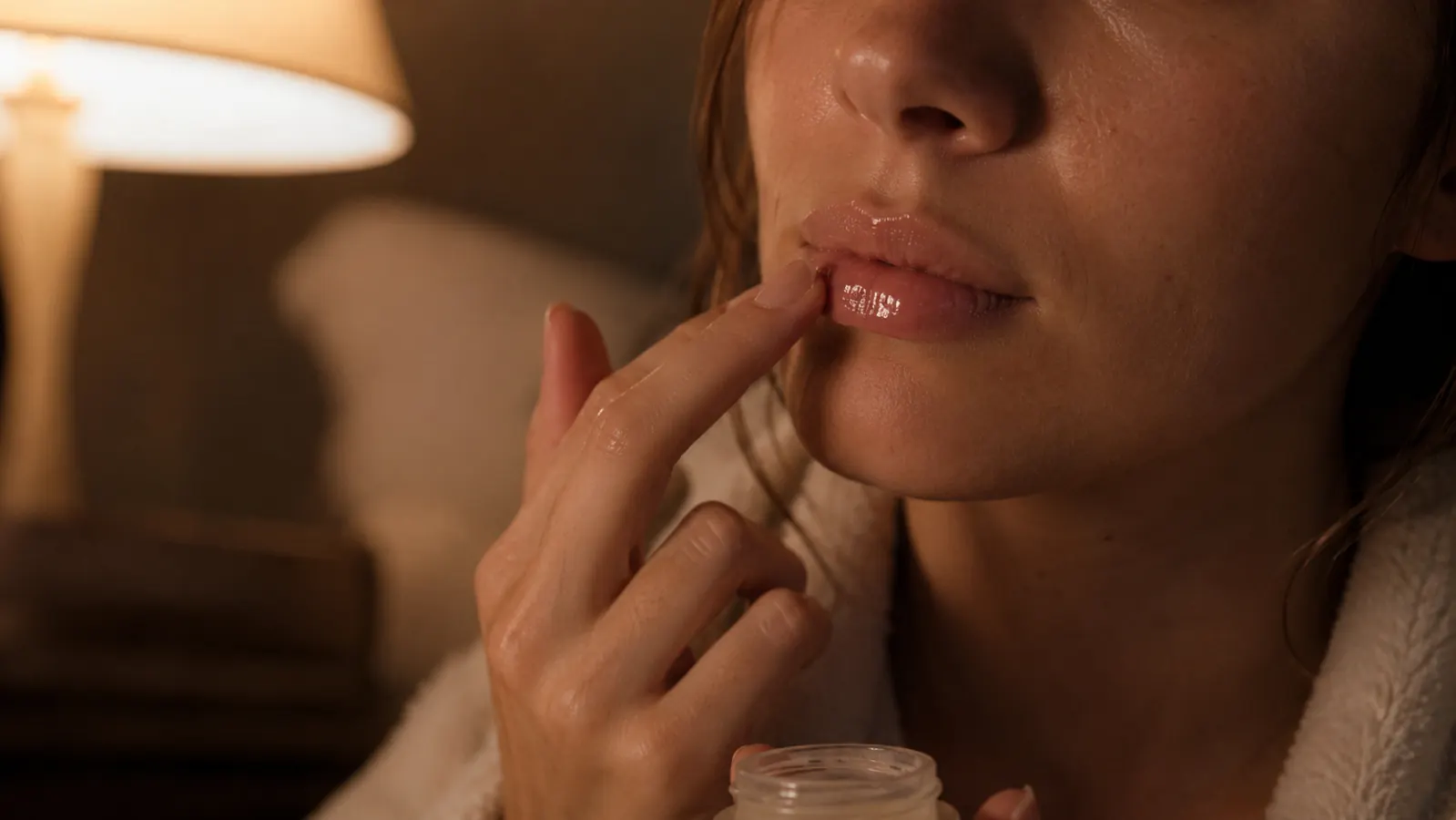
The corners of my mouth used to split open every single winter, and I mean actually split, not just chapped, to the point where smiling too wide would sting for a second and eating anything with vinegar or citrus in it made me wince. I drive long routes for a living, which means hours a day in cab air that's either running the heater full blast or the AC, and either one pulls moisture out of your skin fast, faster than a bathroom or bedroom ever does. I went through more tubes of drugstore chapstick than I want to admit, reapplying every twenty minutes like it was a nervous habit, and none of it actually closed the cracks. It just numbed them long enough to reapply again a few exits down the highway.
What finally worked wasn't a stronger balm or a pricier one. It was switching to an overnight lip sleeping mask, specifically LANEIGE's Lip Sleeping Mask, and giving my lips eight uninterrupted hours to actually repair instead of getting wiped off by coffee, food, or my own tongue every hour like a regular balm does. Below is the exact five-step routine I use now, in the order I do it, plus what I add on the nights the cracking is worse than usual and what I keep in the truck for daytime backup.
Stop Reapplying Balm Every 20 Minutes and Let Your Lips Actually Heal
LANEIGE's Lip Sleeping Mask is built to sit on your lips overnight, not get wiped off at the first sip of coffee. Shea butter and antioxidants go to work while you're asleep instead of racing your reapplication schedule all day.
Amazon Check Today's Price on Amazon →Step 1: Gently Clear Away Loose, Flaking Skin First
Before anything goes on your lips, get the dead, flaking skin off, gently. This was the step I skipped for years, and it's a big part of why nothing I applied ever seemed to sink in or make a real difference by morning. If there's a layer of dry, lifted skin sitting on top, your treatment is basically sitting on that layer instead of reaching the cracked skin underneath it, which means you can use the best product on the shelf and still feel like nothing's changing.
I use a damp, soft washcloth and rub in small circles for about ten seconds, just enough to loosen what's already flaking. Never a dry towel, never a hard scrub, and never anywhere near an open crack that's actively bleeding or raw, that just reopens it and sets you back another few nights. If a spot is genuinely split and tender, skip exfoliating that exact spot entirely for a night or two and let step two do the work instead while the rest of your lips get the gentle cleanup.
On nights when I'm not dealing with active cracks, just general dryness and flaking, I'll use the flat side of a soft-bristle toothbrush instead of a washcloth, same light circular motion, same ten seconds. Either tool works. The point isn't the tool, it's doing this gently and only when there isn't broken skin to irritate. I keep a spare toothbrush just for this in my bag now so I'm never tempted to skip it because the good one's still wet from brushing.
Step 2: Apply a Thick Layer of the Sleeping Mask Right Before Lights Out
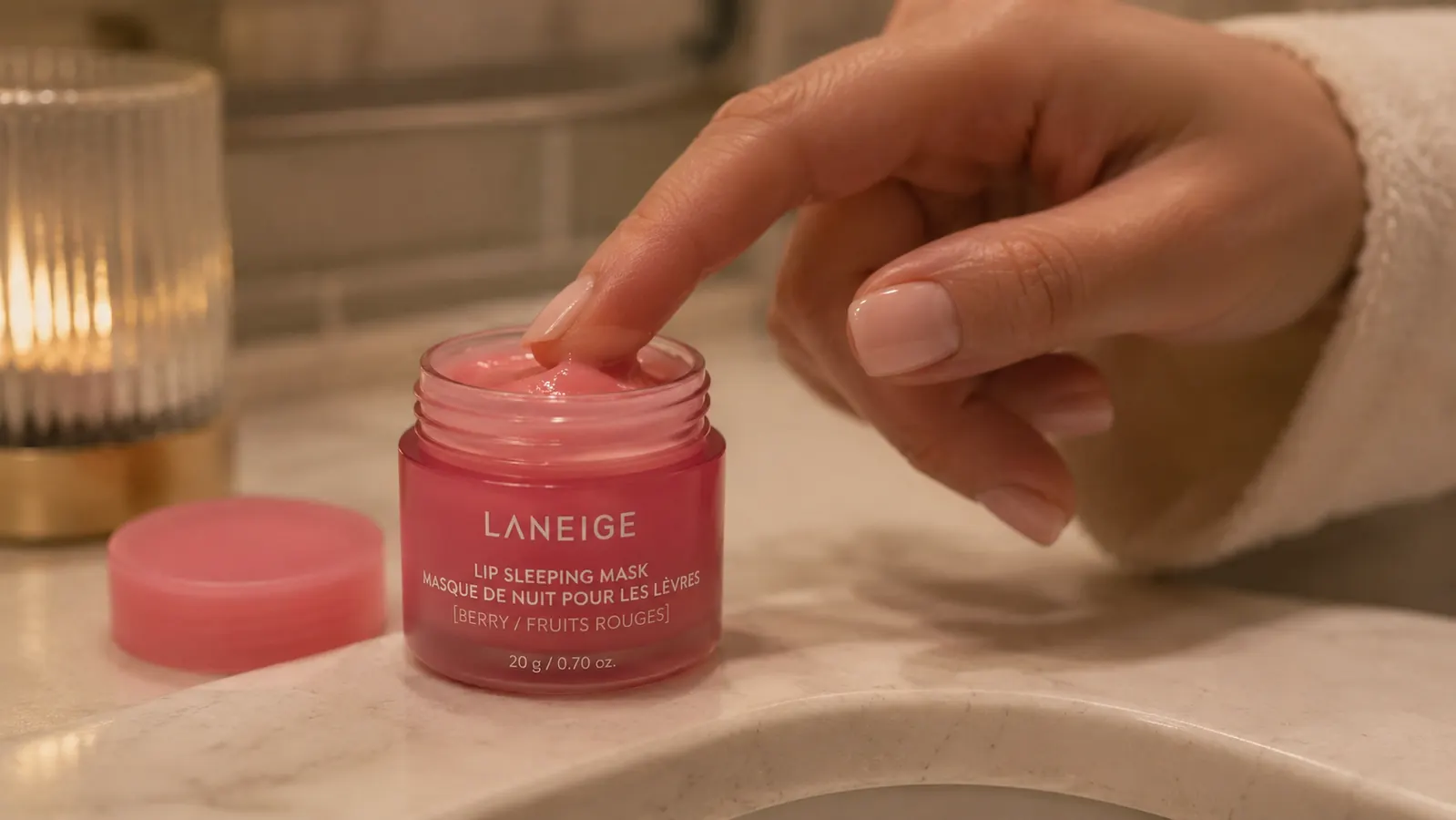
This is the step that actually changes the outcome. Right before bed, not an hour before, I scoop a generous amount of LANEIGE Lip Sleeping Mask with my fingertip and pat it on, thicker than feels reasonable at first. Thin layers work fine for daytime maintenance, but for lips that are actively cracked, you want enough product sitting there that it's still doing something six or seven hours later, long after you've stopped thinking about it and fallen asleep.
I don't rub it in fully the way you would a regular balm. I pat it on and let it sit as more of a mask than a lotion, which is exactly what it's designed to be. The shea butter forms a barrier that holds moisture against your skin instead of letting it evaporate overnight, which is the single biggest difference between this and a stick balm you'd wipe on and forget. A stick balm sits on the surface for a few minutes and thins out fast. This is built to still be doing work at 4am, hours after you've stopped applying anything.
The first few nights I did this, I genuinely thought I was using too much. I wasn't. For lips this cracked, more coverage overnight beats a thin layer every time, and you're washing most of it off in the morning anyway. If you wake up and it feels tacky rather than tight and flaky, that's actually a sign it's still doing its job, not a sign to use less next time.
Step 3: Protect the Cracks From Your Own Habits the Next Day
Healing overnight only matters if you're not undoing it during the day. The habit that set me back the most without me realizing it was lip licking, especially in dry cab air when my mouth felt tight and my hands were both on the wheel. Licking your lips feels like relief for about ten seconds and then makes everything worse as the saliva evaporates and pulls even more moisture out of already-cracked skin. I had to consciously catch myself doing it, probably a dozen times a day at first, and I honestly hadn't noticed how often I did it until I started paying attention.
Flavored balms and anything with menthol, camphor, or a strong minty tingle were another mistake I made for years. That tingle feels like it's doing something, but on already-cracked skin it's often just irritation, and some of those ingredients are mildly drying with repeated use, which keeps the cycle going instead of breaking it. During the day I switch to a plain, unscented balm over whatever mask residue is left from the night before, nothing with a flavor I'd be tempted to lick off at a red light.
If you breathe through your mouth a lot, whether from congestion, a long shift, or just habit, that's constant airflow drying out your lips the same way a hair dryer would. I can't always fix that on the road, but I keep a bottle of water within reach and take it as a reminder to close my mouth and breathe through my nose when I catch myself doing it. Cracking down heater or AC vents away from my face directly helped too, once I noticed how much they were aimed right at my mouth.

Step 4: Layer a Thin Balm Over the Mask on the Roughest Nights
Most nights, the sleeping mask alone is enough. But during the driest stretches, deep winter, a run through the desert with the AC running nonstop, I add a very thin layer of a plain occlusive balm over the mask before bed. Petroleum jelly or a simple lanolin balm works fine here. The idea is to seal the sleeping mask's moisture in even harder on nights when the air around you is actively pulling it back out faster than usual.
This isn't a nightly step for me anymore, it's a rough-night step. If you find yourself needing it every single night indefinitely, that's usually a sign the air in your bedroom or your cab is drier than your lips can keep up with on their own, and a small humidifier will do more for you long-term than any extra product layer stacked on top of another one.
Keep this layer thin. The goal is sealing in what the sleeping mask already put there, not smothering it. A thick balm on top of a thick mask just sits heavy and doesn't add much beyond what the mask alone was already doing, and it can make the whole thing feel greasy against a pillowcase for no real benefit.
Step 5: Track the Healing Over Five to Seven Nights
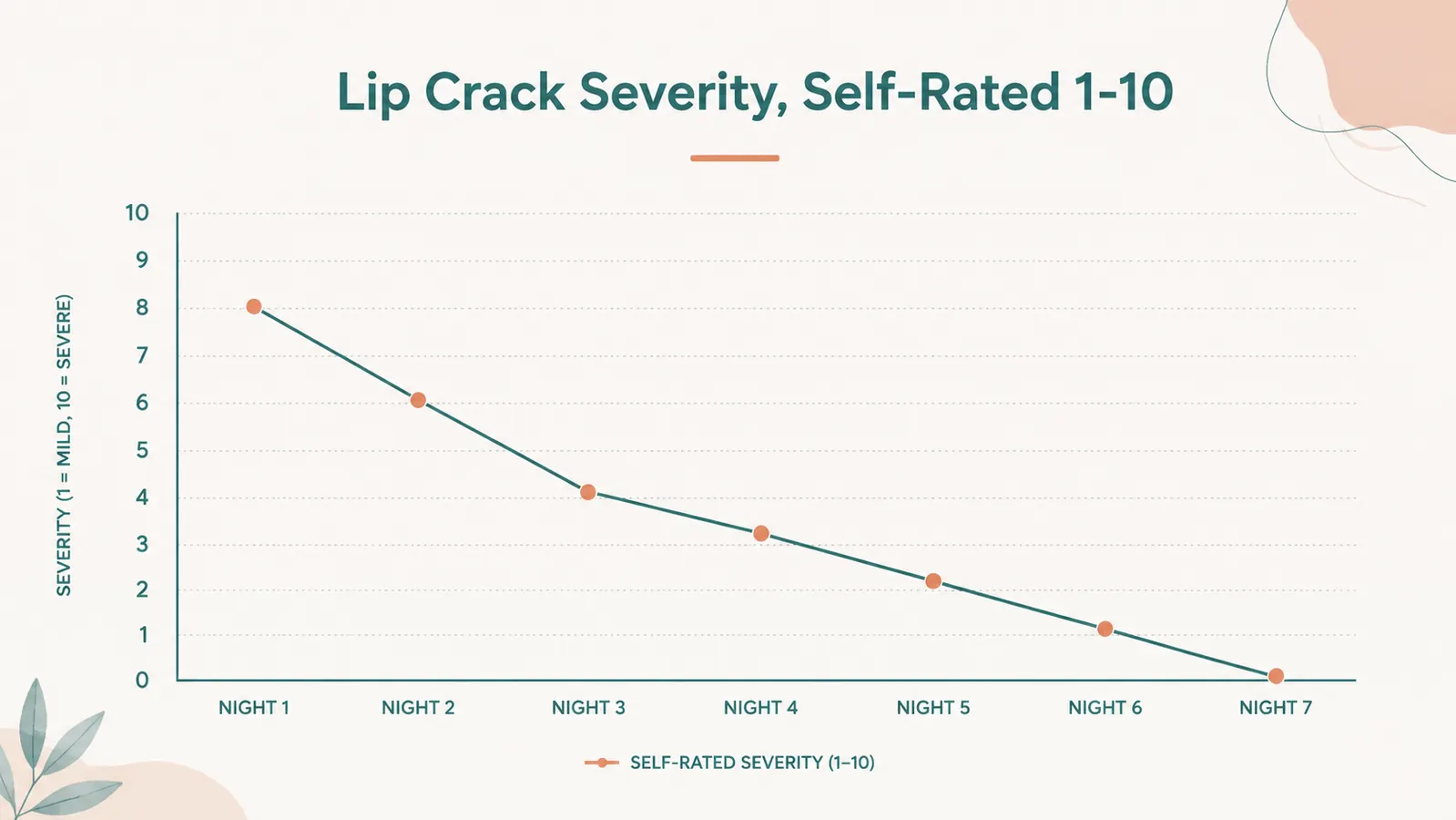
Cracked lips don't close in one night, even with the right product. The first two or three nights, what I noticed was less tightness and less stinging when I smiled or ate something acidic, not full healing yet. By night four or five, the actual splits at the corners had visibly started to close over. By the end of a full week of consistent nightly use, the flaking was gone and my lips felt normal again for the first time in weeks, no more wincing at coffee or cold air.
I kept a rough note on my phone rating how tight and cracked my lips felt each morning on a scale of one to ten. It sounds small, but it kept me consistent through the first few nights when it didn't feel like much was happening yet, right before it actually started working. Consistency matters more here than intensity, one thick application every single night beats three thick applications spread across a week whenever you happen to remember.
If you're past a full week of nightly use with zero improvement, or if a crack is deep enough that it's bleeding, doesn't stop stinging, or looks infected, that's past what any lip treatment should be handling on its own. See a doctor at that point. Persistent cracking at the corners of the mouth specifically can sometimes point to something like a vitamin deficiency or an underlying skin condition, and no amount of overnight balm fixes that root cause, no matter how good the product is.
What Else Helps
A few things outside the nightly routine made a real difference for me. A humidifier in the bedroom cut down how dry my lips felt by morning more than I expected, especially once the heater kicks on for the season. Staying ahead of plain water intake through the day matters too, by the time your mouth feels dry, your lips are usually already behind on hydration and playing catch-up. And swapping my daytime lip product to something with SPF made a noticeable difference once spring hit, sun exposure dries and damages lip skin the same way it does the rest of your face, it just gets overlooked because nobody thinks of their lips as needing sunscreen.
Diet is the thing people ask me about most, and I'm not going to pretend I've run a controlled experiment on myself. What I can say is that the winters I was low on B vitamins and iron, according to a routine bloodwork panel, were also the winters my lips cracked the worst, and a doctor mentioned that's a known pattern worth watching if it happens repeatedly. I'm not saying supplements fixed it on their own, the nightly mask did the actual healing, but staying on top of hydration and a decent diet seemed to make the cracking show up less often to begin with.
If you're prone to this every single winter the way I was, starting the overnight routine before the cracking actually shows up is easier than trying to heal it once it's already split. I start mine as soon as the heater goes on for the season now, instead of waiting until my lips are already raw and playing catch-up for a month. It's a lot less painful to prevent than to reverse, and it costs the same five minutes either way.
A stick balm you wipe on and forget can't out-heal eight straight hours of a mask that's actually still there in the morning.
Give Your Lips a Full Night to Heal Instead of Twenty Minutes at a Time
If cracked corners and flaking are showing up again this season, LANEIGE's Lip Sleeping Mask is built for exactly this, one thick nightly application instead of a balm you're chasing all day.
Amazon Check Today's Price on Amazon →