

If you've spent years running a hand over the backs of your arms or the fronts of your thighs and feeling something closer to fine sandpaper than skin, you already know the usual advice doesn't do much. Lotion sits on top of it. A loofah scrubs the surface but never touches what's actually causing the bumps. And a dermatologist visit for something your doctor will likely just call cosmetic, not medical, can mean a copay and a wait for an appointment just to be told to buy an over-the-counter cream anyway. I dealt with rough, bumpy patches on my upper arms since high school gym class made me painfully aware of them, and the routine that finally smoothed things out didn't involve a single office visit. It involved doing the right things in the right order with CeraVe SA Lotion for Rough and Bumpy Skin, applied consistently instead of whenever I happened to remember.
This isn't a miracle fix, and if what you're dealing with is actively inflamed, painful, or spreading in a way that worries you, that's genuinely a reason to see a dermatologist rather than skip the visit. But for the common, garden-variety rough texture that a lot of people quietly live with, tiny raised bumps that never quite go away, skin that catches on a sweater sleeve, arms you cover up out of habit more than necessity, the five-step routine below is the exact one that took my arms from something I hid year-round to something I stopped thinking about entirely. I'm walking through it in the order I actually do it, along with the mistakes I made trying to rush the process the first time around.
Tired of Feeling Sandpaper Every Time You Run a Hand Over Your Arm?
CeraVe SA Lotion pairs salicylic and lactic acid with ceramides and hyaluronic acid, built to smooth rough, bumpy texture without stripping the skin barrier underneath.
Amazon Check Today's Price on Amazon →Step 1: Apply Right After a Lukewarm Shower, Not a Hot One
Timing matters more than most people expect. A hot shower feels great, especially in the winter, but it strips away the oils your skin needs to hold onto moisture, which works against everything you're about to do in the next step. I switched to lukewarm water years ago for this exact reason, and it made a noticeable difference in how tight and flaky my skin felt by evening, even before I started using anything exfoliating. It's a small change that costs nothing and takes zero extra time, which makes it an easy first habit to build before you even open the bottle.
Pat your skin dry instead of rubbing it with the towel, and stop while it's still a little damp rather than waiting until it's fully dry. That small window of residual moisture right after a shower is when your skin absorbs the most out of whatever you put on it next, which is exactly why this step comes first and not as an afterthought. If you towel off completely and then wander around for ten minutes before applying anything, you've already lost a good chunk of the benefit this timing is meant to give you.
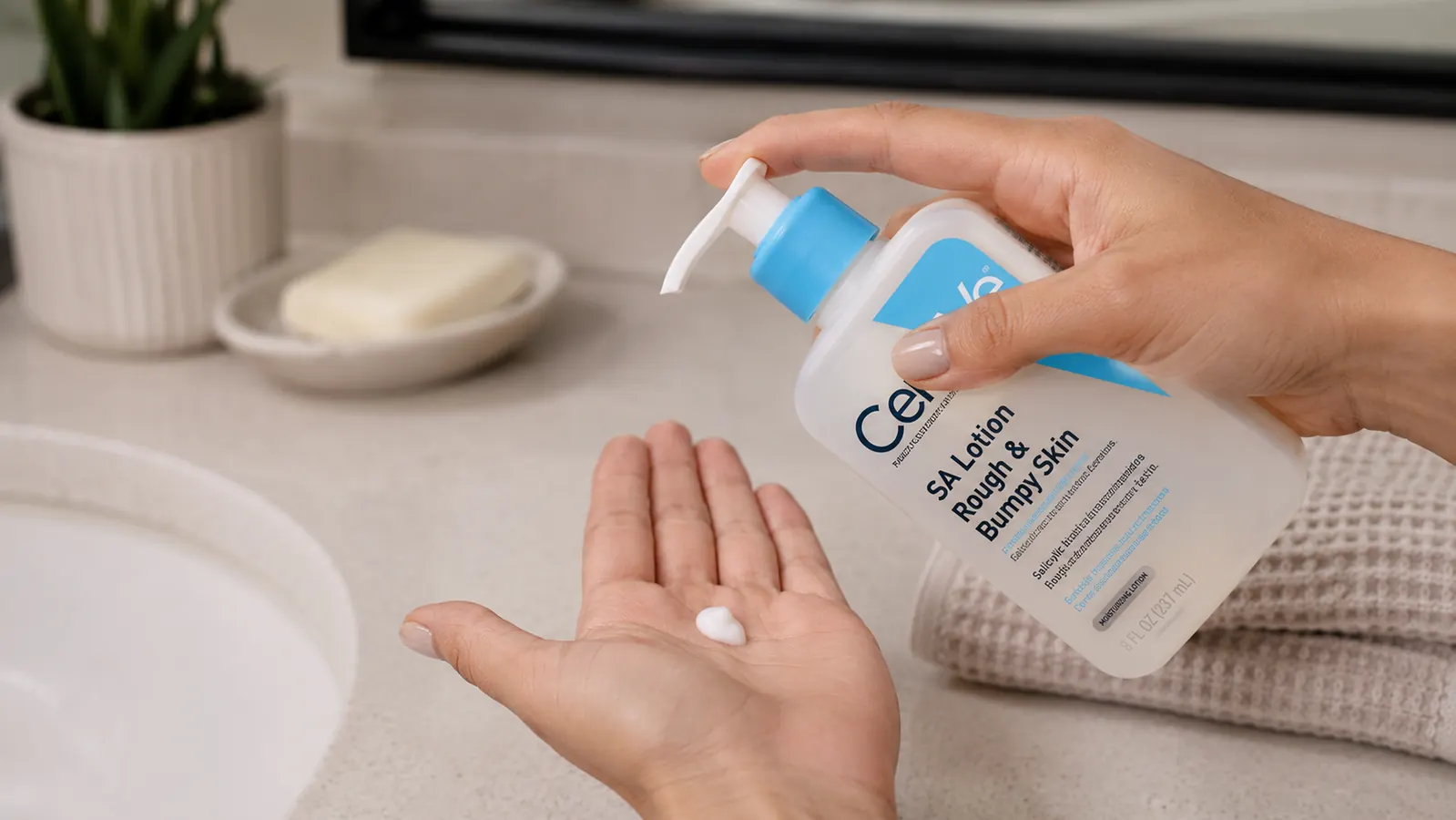
Step 2: Work the Lotion Into the Bumps, Not Just Over Them
This is the step that actually does the work. Pump a quarter-sized amount into your palm and apply it to the backs of your arms, your outer thighs, or wherever the texture shows up, rubbing it in with a bit of pressure rather than a light swipe. You're not trying to scrub anything off. You're trying to get the acids down into the clogged follicles that are causing the bumps in the first place, and a light pass across the surface doesn't do that nearly as well as a deliberate, slightly firmer application that actually massages the product into the skin for a full twenty to thirty seconds per area.
The reason this lotion works differently than a plain moisturizer comes down to what's actually in it. Salicylic acid is oil-soluble, so it can get inside the clogged follicle instead of sitting on top of dead skin the way most creams do. Lactic acid works alongside it on the surface layer, loosening the buildup of dead cells that gives rough skin its sandpaper feel. Ceramides and hyaluronic acid ride along in the same bottle to keep that exfoliation from turning into irritation, which is the part a lot of cheaper scrubs and single-ingredient acid products skip entirely. It's the combination doing the work here, not any one ingredient carrying the whole formula on its own.
Expect a faint sting for the first thirty seconds or so during the first week or two, especially anywhere the skin is already a little irritated. That's normal and it fades as your skin adjusts, usually somewhere between day seven and day twelve in my experience and in what most people who use this kind of formula report. If it stings sharply or the feeling doesn't ease up within a minute, rinse it off and check with a doctor before continuing, that's outside the range of a normal adjustment period and worth taking seriously rather than pushing through.
Step 3: Protect the Treated Skin From Sun and Rough Fabric
Salicylic acid can make skin a little more sun-sensitive, so if the area you're treating gets regular sun exposure, whether that's a short-sleeve commute, time on a patio, or an outdoor job, put sunscreen on it during the day. I skipped this for the first month out of habit and noticed my arms got pinker faster than usual on a couple of sunny afternoons, which was an easy fix once I started applying sunscreen as part of my morning routine instead of an afterthought reserved for the beach or a pool day.
Rough fabric matters too, more than people usually think. Wool sweaters, stiff denim, and anything that rubs repeatedly against a treated area can re-irritate skin that's in the middle of healing. It's not that you need to avoid these fabrics entirely, just be aware that a day of constant friction against freshly treated skin can undo some of the progress you're making, especially in the first couple of weeks while your skin is still adjusting to the acids and building up a bit of tolerance. Once your skin has adjusted, this stops mattering nearly as much.
Step 4: Add a Slightly Heavier Layer to the Worst Patches
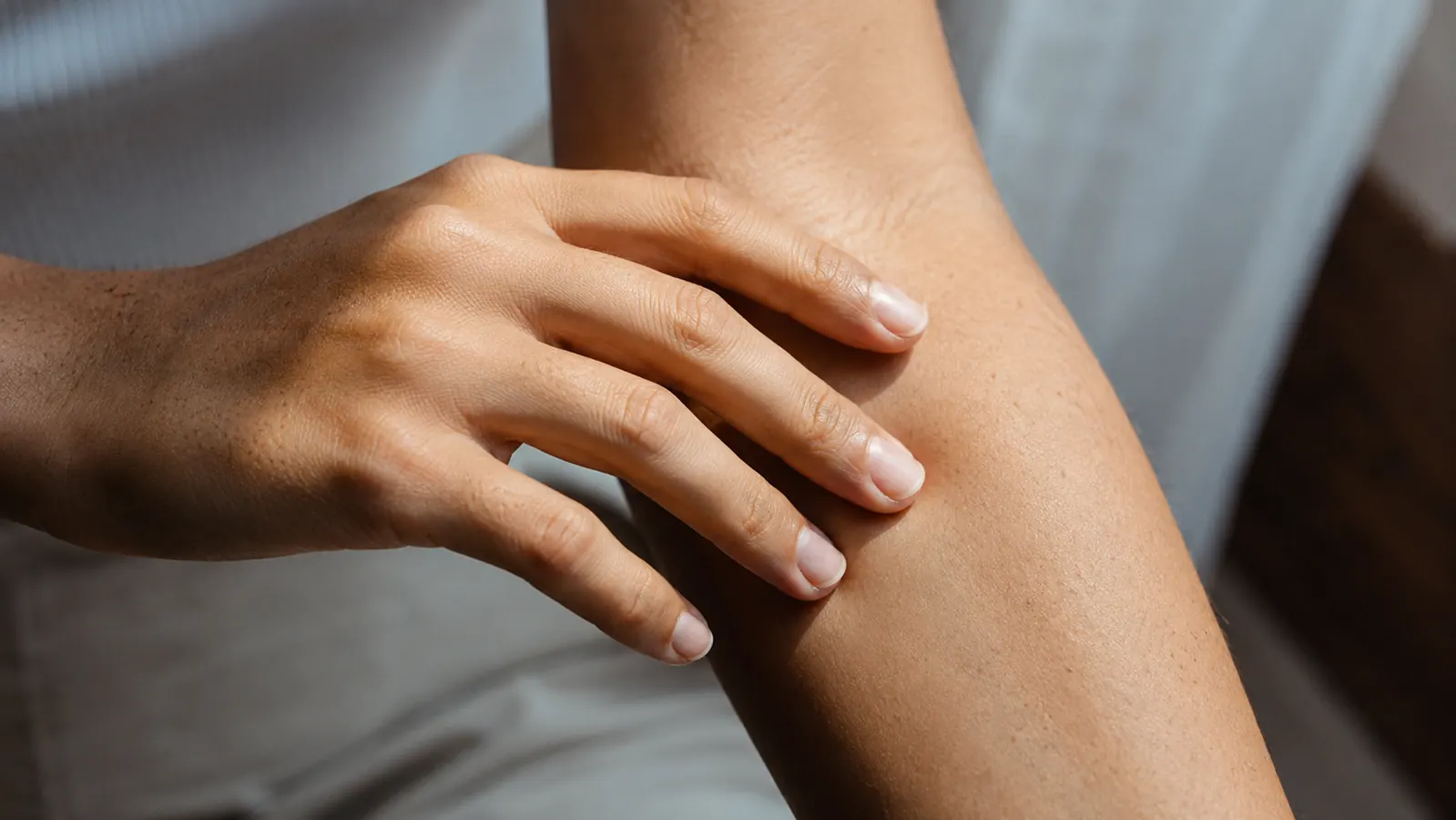
Most of your skin will respond fine to the standard twice-daily amount, but a few spots are usually worse than the rest, the outer thigh instead of the inner one, one arm more than the other, a patch right above the elbow that seems to lag behind everywhere else. On those specific patches, once your skin has adjusted to the routine after the first week or two, I go slightly heavier with the lotion at night, working it in a bit longer than I do everywhere else and letting it sit for closer to a minute before pulling on pajamas.
This isn't something to do from day one everywhere. Going heavy too early, before your skin has built up any tolerance to the acids, is more likely to cause irritation than to speed up results. Save the heavier application for the specific stubborn patches once the rest of your skin is already used to the routine, and drop back to the normal amount on any patch that's caught up to the rest. Treating every patch identically regardless of how it's actually responding is one of the more common ways people either waste product or slow down their own progress.
Step 5: Track Texture Weekly, Not Daily
Checking your skin every single day is a fast way to talk yourself out of something that's actually working, because day-to-day change is small enough that it's easy to miss or second-guess. Pick one day a week, same lighting if you can manage it, and run a hand over the treated area or take a quick photo. That weekly snapshot is what actually shows the trend, where a daily check mostly shows noise, and it's the difference between sticking with a routine long enough to see it work and giving up on week two thinking nothing is happening.
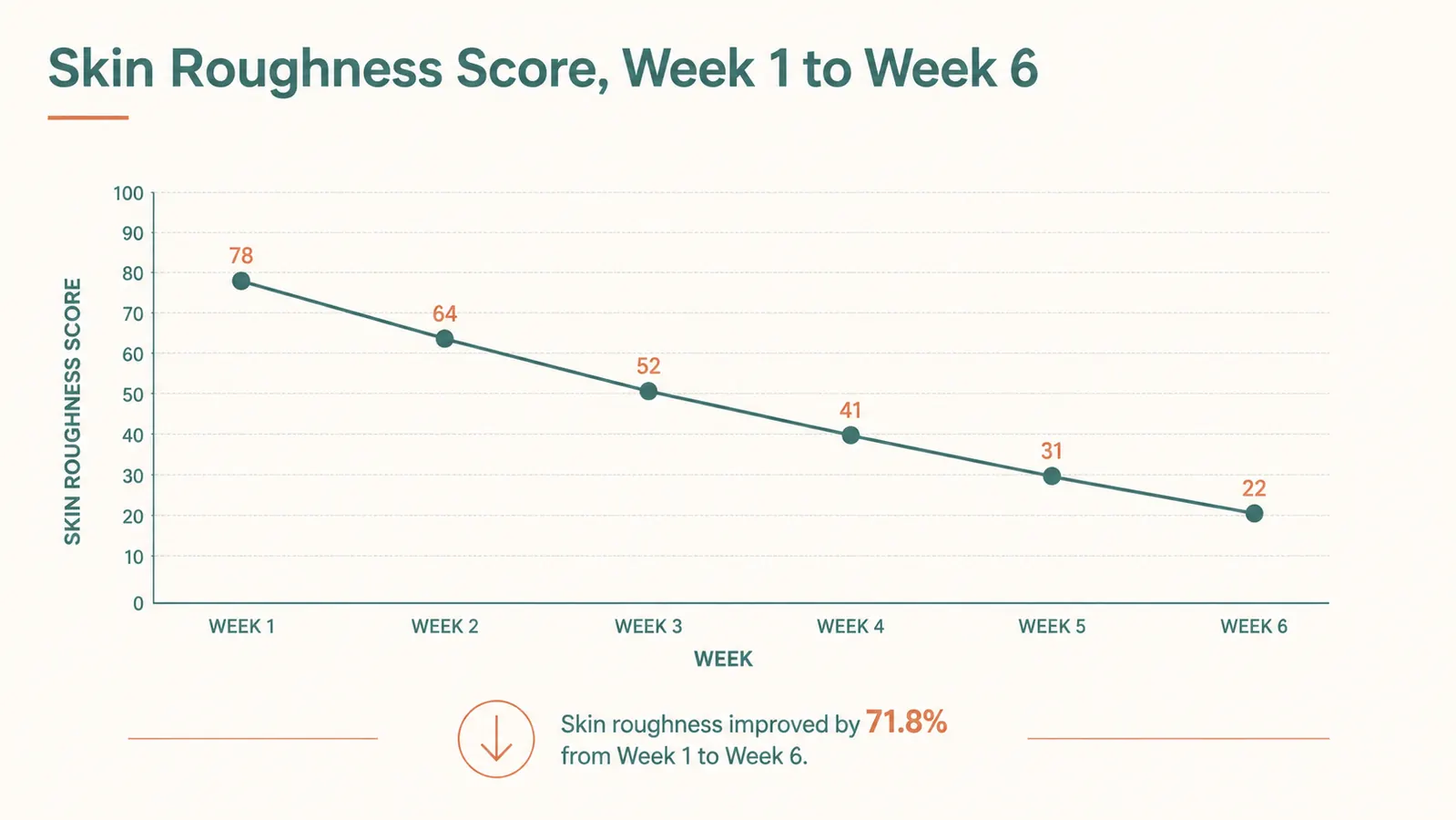
In my own experience, the first two weeks were mostly about adjusting to the mild sting with no visible change worth mentioning, and that stretch is genuinely the hardest part to push through. By week four, the texture had gone from consistently rough to rough only in a couple of spots. By week six, running a hand over my arm in normal light didn't feel meaningfully different from running it over the rest of my skin anymore. That timeline lines up with what most people report, expect real change closer to a month in rather than a week, and don't judge the routine before you've given it that long, even if the first ten days feel discouraging.
If you're six to eight weeks into consistent, twice-daily use with no improvement at all, or if you notice bumps that are painful, spreading quickly, or look infected, that's the point to stop self-treating and see a dermatologist. Rough, bumpy skin that doesn't respond to a proper exfoliating routine can sometimes point to a condition that needs a prescription-strength treatment, and no over-the-counter lotion, however good, replaces that conversation when it's actually warranted. Trust your own read on it. Most rough skin responds to consistency, but not all of it, and knowing when to escalate is part of doing this the right way.
What Else Helps
A humidifier in the bedroom made a bigger difference than I expected, especially once the heater kicks on for the season and indoor air dries out along with the outdoor air. Dry indoor air undoes some of what a good lotion is trying to do, so if your house or apartment runs dry, it's worth the small fix before you assume the lotion itself isn't working hard enough. I run mine from the first cold night of the season through the last one in spring, and my arms noticeably hold their progress better through that stretch than they did before I started.
Switching to a gentler body wash without heavy fragrance also cut down on how quickly the rough texture came back between applications. Harsh, stripping soap works against the barrier support the ceramides in this lotion are trying to provide, so pairing it with a milder wash gives the routine a better chance to actually hold. Drinking enough water through the day matters more than people expect too, by the time skin feels tight and papery it's usually already behind on hydration, playing catch-up rather than staying ahead of the problem.
And if you know certain seasons are worse for you, starting the twice-daily routine a couple weeks before that season hits is a lot easier than waiting until the bumps are already back and playing catch-up. I start applying as soon as the first cold, dry stretch of fall shows up now, instead of waiting until my arms are rough again and I'm trying to undo a setback that a little bit of prevention could have avoided in the first place.
You're not trying to scrub the bumps away. You're trying to get the acid down into the follicle causing them, and that takes consistency, not force.
Ready to Stop Covering Up Rough, Bumpy Skin?
Give this five-step routine a real six weeks with CeraVe SA Lotion before you judge the results. It's built to smooth texture without stripping the skin barrier that keeps it calm along the way.
Amazon Check Today's Price on Amazon →