

By 1pm my forehead used to look like I'd just finished a workout I never did. I'd blot it, powder over it, and by 3pm we were right back where we started. I spent two years bouncing between harsh acne washes that left my skin tight and squeaky, which I mistook for 'clean,' and rich moisturizers that made the shine worse by dinner. What actually broke the cycle wasn't a fancier product. It was fixing the order of operations, starting with a foaming cleanser that removes oil without stripping my skin bare, which is what was making my face overproduce oil in the first place.
This is the exact routine I've used for the last several months, built around CeraVe's Foaming Facial Cleanser. It's not the only piece, but it's the piece that made the rest of the routine actually work instead of fighting itself. I've also handed this same five-step sequence to two coworkers who were stuck in the same wash-more, shine-more loop I was in, and both saw their midday shine drop within a month without changing anything else in their routine. Below are the five steps in the order I do them, plus what to change if step one alone doesn't solve it.
Start With the Cleanser That Doesn't Backfire By Noon
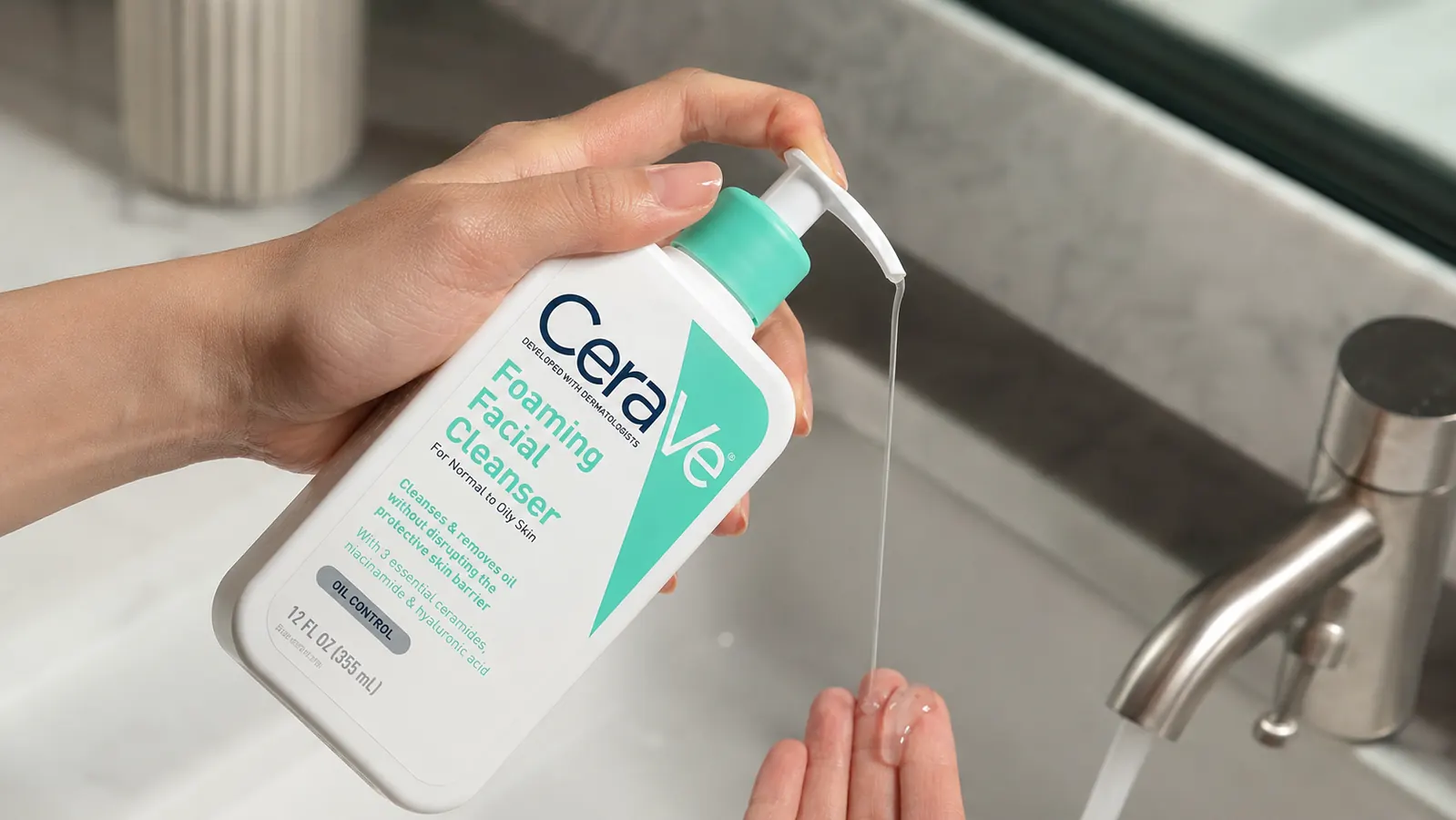
CeraVe's Foaming Facial Cleanser is formulated with niacinamide and ceramides so it lifts oil without leaving your skin tight or triggering a rebound. It's the first thing I changed, and the change that mattered most.
Amazon Check Today's Price on Amazon →Step 1: Figure Out If You're Actually Oily or Just Dehydrated
Before you fix anything, confirm what you're fixing. I made this mistake for a full year. My skin got shiny by early afternoon, so I assumed I had classic oily skin and reached for the harshest foaming wash on the drugstore shelf. What was actually happening: I was stripping my skin every morning with a sulfate-heavy cleanser, my skin panicked and overproduced oil to compensate, and by 2pm I was dealing with a rebound, not my natural skin type.
A quick way to check: wash your face, apply nothing, and watch what happens over the next hour. If your skin gets tight, flaky, or uncomfortable within 20 minutes and then turns shiny a couple hours later, you're likely dealing with dehydrated skin that's overcompensating, not true oily skin. If it stays comfortable and just gradually gets shinier through the T-zone over 3 to 4 hours with no tightness in between, that's closer to genuinely oil-prone skin. Both benefit from the steps below, but knowing which one you're dealing with changes how aggressive you should be with actives later.
Weather and hormones play a bigger role than most people give them credit for, too. My skin runs noticeably oilier in July than it does in January, and the few days before my period it's oilier still. That's normal. The goal of this routine isn't to eliminate oil production entirely, your skin needs some, it's to bring it back down to a level that doesn't run your day.
Step 2: Wash Twice a Day, Not More, With a Foaming Cleanser
Twice. Morning and night. Not after the gym, not again at 3pm because you feel greasy, not a third time before bed if you already washed off makeup. Every extra wash strips more of your skin's natural oil barrier, and every strip triggers more oil production to replace what you just removed. I know because I used to wash four times a day and wondered why nothing improved.
For the wash itself, a foaming formula matters here specifically because it's built to lift surface oil and debris without needing you to scrub. I use CeraVe's Foaming Facial Cleanser with lukewarm water, never hot, massaging it in with my fingertips for about 30 seconds, focusing on the forehead, nose, and chin where oil concentrates. The niacinamide in it is doing real work in the background, it's shown in research to help regulate sebum output over time, which is the actual goal here, not just removing today's shine but reducing tomorrow's.
The ceramides matter just as much as the niacinamide, even though they get less attention. Ceramides are part of what holds your skin barrier together, and a compromised barrier is one of the quiet drivers behind excess oil production. A cleanser that foams away grease but also puts ceramides back is doing two jobs most people think are opposites, cleaning and repairing, at the same time.
Rinse with lukewarm water until your skin feels clean, not squeaky. Squeaky clean means over-stripped, and over-stripped means more oil by afternoon. That distinction took me embarrassingly long to learn.
Step 3: Moisturize Immediately, Even Though It Feels Backwards
This is the step most people with oily skin skip, and it's the reason step 2 doesn't work on its own. Skipping moisturizer because your skin is already oily is like skipping water because it's already raining outside, it doesn't stop your skin from needing hydration, it just means your skin has to generate its own moisture through oil production, which is the exact problem you're trying to solve.
The trick is picking the right texture. You want something lightweight and oil-free, applied within about a minute of patting your face dry so it locks in water instead of just sitting on top of dry skin. A gel-cream or lotion with hyaluronic acid works well here. I keep it to a thin, even layer, no rubbing it in for a full minute, no piling on extra because my skin 'still feels dry.' If it still feels dry after 60 seconds, that's a sign to check your cleanser step, not to add more moisturizer on top.
If you're heading out the door, sunscreen goes on last, after the moisturizer has fully absorbed, and makeup goes on after that. Rushing this order is how people end up pilling product on their nose by 10am. Give each layer a real minute to sink in before adding the next one, even on a busy morning.

Step 4: Handle Midday Shine Without Re-Washing Your Face
Around hour six or seven, most oil-prone skin starts to show shine again, usually across the forehead and down the nose. The instinct is to wash it off. Don't. That resets the stripping cycle from step 2 and you'll be shinier by tomorrow afternoon, not less. Instead, keep a small pack of blotting papers or blotting film in your bag or desk drawer. Press, don't rub, against the shiny areas for a few seconds each. This lifts excess surface oil without removing your moisturizer or triggering more production underneath.
If you wear makeup, a translucent powder pressed lightly over the T-zone does the same job and keeps you from touching your face repeatedly, which is its own source of transferred oil and bacteria. What you're doing in this step isn't fixing the root cause, it's just managing the symptom for the rest of the day while steps 2 and 3 do the actual long-term work.
One habit that helped more than I expected: keeping a bottle of water at my desk. Mild dehydration through the day can nudge your skin toward the same overcompensating oil response as an overly harsh cleanser. It's not a cure on its own, but paired with blotting instead of washing, it noticeably stretched out the time between shiny patches.

Step 5: Give It Three to Four Weeks Before You Judge Results
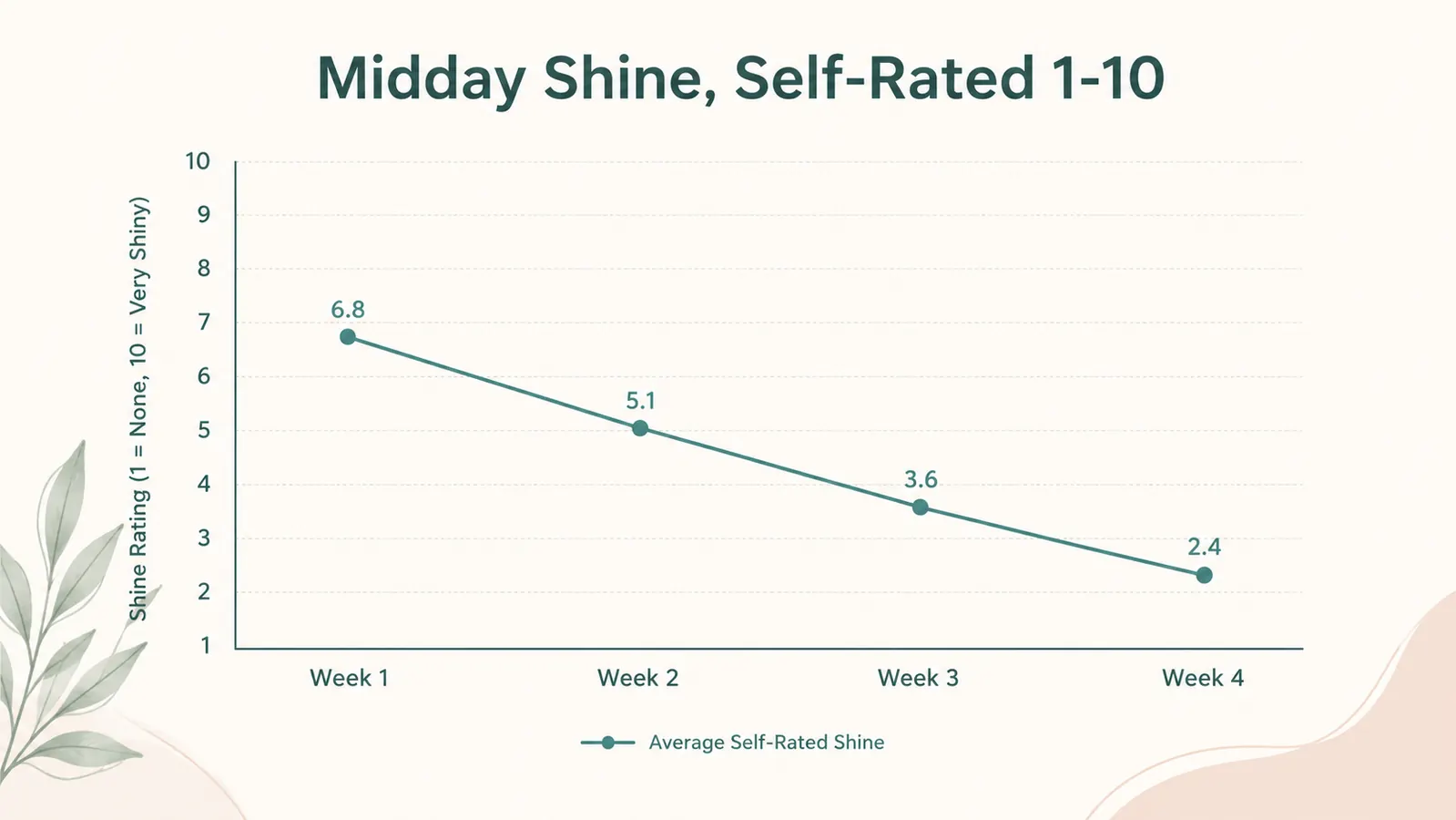
This is the step nobody wants to hear. Sebum production doesn't recalibrate in three days. I didn't notice a real difference in my own skin until about the middle of week three, and it wasn't dramatic at first, it was more like the shine that used to show up by noon started showing up closer to 3pm instead. By week five it had leveled off to a manageable, mostly matte T-zone with normal cheeks, which is realistically as far as a cleansing routine alone will take most people.
Track it if you can. I kept a rough note on my phone every few days rating my midday shine on a scale of 1 to 10. It's a small thing, but it kept me from quitting in week two when it felt like nothing was happening, right before it actually started working.
If you're past week four and truly seeing no change at all, not slower progress, no progress, that's usually a sign one of the earlier steps is being skipped or undone somewhere. The most common culprits I've seen are still washing more than twice a day out of habit, skipping moisturizer on the days skin looks extra shiny, or switching cleansers again too early because week two felt discouraging. Go back through steps 1 through 4 before assuming the routine itself doesn't work for you.
What Else Helps
A few things outside the core routine made a noticeable difference for me. Switching to a silk or clean cotton pillowcase and actually washing it weekly cut down on the oil and product buildup my face was sitting in for eight hours a night. Sunscreen every morning matters more than people think, an oil-free, non-comedogenic SPF prevents the sun damage that can actually thicken oily skin over time and make pores look larger. And if you're still dealing with stubborn shine after a month of consistent cleansing and moisturizing, a salicylic acid treatment two or three times a week can help clear the oil sitting inside pores rather than just on the surface. Add that in gradually, though, layering too many actives at once is how skin barriers get wrecked.
Diet is the wildcard people ask me about most, and honestly the evidence for any single food causing oily skin is weaker than the internet makes it sound. What I can say from my own experience is that cutting back on late-night dairy and staying consistent with sleep made a small but real difference, alongside the routine, not instead of it. If you're running a humidifier or live somewhere dry, that can shift how much your skin overproduces oil to compensate too, so it's worth paying attention to how your skin behaves across seasons, not just across products.
The fastest way to make oily skin worse is to punish it for being oily. Every strip just tells your skin to make more.
The Cleanser That Started the Whole Routine
If you're only going to change one thing this week, make it the cleanser. CeraVe's Foaming Facial Cleanser is built to lift oil and debris without the tight, stripped feeling that keeps the oily cycle going.
Amazon Check Today's Price on Amazon →